Tag Archives: Science

To Test Cancer Drugs, These Scientists Grew ‘Avatars’ of Tumors

WIRED

Growing organoids in dishes and xenografts in mice lets scientists recreate a living person’s tumor—and test dozens of drugs against them at the same time.

IN 2018, ALANA Welm found herself in an exciting, yet burdensome, position. The University of Utah breast cancer research lab where she leads joint projects with her husband, Bryan Welm, had created lab-grown versions of real tumors isolated from living cancer patients. Each cancer had been translated into two kinds of biological models: xenografts, made by implanting tissue into mice, and organoids, miniature clumps of tissue grown in plastic dishes.

Each simulated cancer was a way to test which of about 45 drugs, some experimental and others approved by the US Food and Drug Administration, might perform best for the real patient. During testing on one patient’s organoids, the researchers isolated a drug that effectively killed its cancer cells. That was the exciting bit. The burden: Welm had no right to do anything about it. She couldn’t tell the patient or her doctor. “We were just doing this for research,” says Welm.

This particular drug had already earned FDA approval to be used against breast cancer, but it wasn’t approved for this patient’s type of cancer. So Welm dialed up her university’s Institutional Review Board, an ethics oversight group.“We called them and said: We found this, we really think we need to let them know,” Welm recalls. The board agreed; the team could bring the patient’s physician into the loop. “That really was an eye-opener,” Welm says. “Wow, we can actually make a difference!”

Yet by the time Welm reached the physician, it was too late. The patient passed away shortly after. “It was heartbreaking,” she says. But it was also motivating: The Welms’ team doubled down on efforts to refine their methods and turn their research into a clinical tool.

Read the full story in WIRED

This Plastic Dot Sniffs Out Infections Doctors Can’t See

WIRED

Keeping wounds covered can help them stay clean. But if bacteria grow beneath the bandages, things can get dangerous.

LIFE, AT ALL scales, leaves behind chemical fingerprints. Some are scents we can pick up with our noses: Jasmine petals lend their sweet aldehydes; an upstairs neighbor leaves his noxious amines in the stairwell. “But there are also gasses that we can’t smell, because they’re just that basic kind of background,” says Andrew Mills, a professor of chemistry at Queen’s University Belfast, United Kingdom. “Things basically undergoing life, turning oxygen into carbon dioxide.”

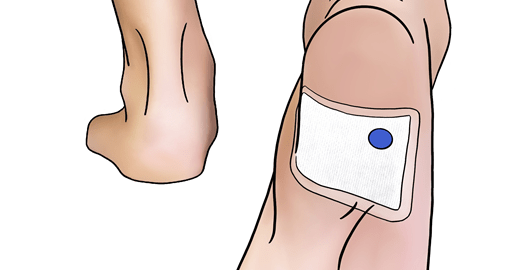
Mills specializes in detecting volatile chemicals, from stinky sulfides to odorless CO2. His lab has focused on sensing gasses as signatures of strange life in undesirable places: Think contaminated ground beef and—more recently—infected wounds. In a study published last month in the journal Chemical Communications, Mills unveiled a simple CO2 detector that can be inserted into dressings for chronic wounds. It changes color when it senses rising concentrations of the gas, a tell-tale sign of dangerous infections.

Read the full story in WIRED

A Twist on Stem Cell Transplants Could Help Blood Cancer Patients

WIRED

Cell grafts can help people fighting leukemia—but they risk a dangerous immune reaction. An experimental way to filter donors’ cells might offer a solution.

CATHY DOYLE FELT fine. And in April 2016, when she logged in to a web portal to check the results of some routine blood work, the little numbers on the screen agreed—mostly. But her white blood cell count looked low. She called the doctor’s office. “What’s going on?” the chatty, spiritual 58-year-old from Pittsburgh remembers saying.

The staff asked if she’d recently been sick. She had. Doyle caught a bad cough on a family cruise, but it had passed. That might be it, they agreed, but it would be best to come in for more blood tests. “Bless the doctor,” Doyle says. “He just kept hoping it wouldn’t be leukemia.”

Read the full story in WIRED

The Brutal Reason Some Primates are Born a Weird Color

WIRED

When species have babies with conspicuous fur, it can attract good attention—or bad. A new theory could explain why.

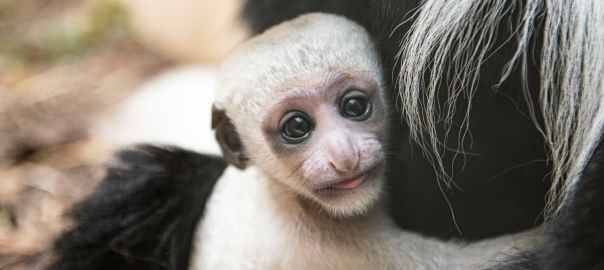
THE FIRST THING you might notice about the Delacour’s langur is its color. It’s got a jet black torso, limbs, and head, with a shaggy white butt sandwiched in the middle. (These monkeys—Trachypithecus delacouri if you want to get technical—quite literally look like Oreos.) But that’s just how the adults look. The babies are a different story: They’re orange.

This is their distinct “natal coat,” which fades after a few months. Babies from dozens of other primate species also have fur that’s a different color from that of adults. “One of the big questions has always been why—why would they have distinct coats?” asks Ted Stankowich, an evolutionary ecologist and Director of the Mammal Lab at California State University Long Beach.

Read the full story in WIRED

Why Some Animals Can Tell More from Less

WIRED

Researchers find that densely packed neurons play an outsize role in quantitative skill—calling into question old assumptions about evolution.

AT AN UPSTATE New York zoo in 2012, an olive baboon sat with her baby at a table opposite a mesh screen and a curious grad student who was holding some peanuts. In one hand, the student had three peanuts. In the other, eight. The mother baboon could see both hands through the mesh, and she chose the one with eight. The student noted the correct choice. But she also noticed the baby, who followed along and interfered by reaching to make choices itself.

“It was clear that the baby understood what the theme was,” says Jessica Cantlon, who studies the evolution of cognition at Carnegie Mellon and led that Seneca Park Zoo study. In a second version of the test, her team found that even tiny baboon infants, at less than a year old, chose the bigger quantity on their own. The team concluded that both adult baboons and their babies could, in a sense, count.

Read the full story in WIRED.

Surprise! The Pandemic Has Made People More Science Literate

WIRED

Despite rampant misinformation, Covid-19 has pushed science into the zeitgeist, as people have absorbed new words and how scientific discovery actually works.

FOR THREE GENERATIONS, Betsy Sneller’s family has sipped something they call “Cold Drink.” It’s a sweet mix of leftover liquids, stuff like orange juice and the remnants from cans of fruit, a concept devised by Sneller’s grandmother during the Great Depression. “All the little dregs get mixed together, and it tastes like a fruity concoction,” Sneller says. Cold Drink is an idea—and a name—born from crisis.

Sneller is now a sociolinguist at Michigan State University who studies how language changes in real time. For nearly two years, Sneller has analyzed weekly audio diaries from Michiganders to understand how the pandemic has influenced language in people of all ages, a project initially called MI COVID Diaries. “We find very commonly that people will come up with terms to reflect the social realities that they’re living through,” they say. “New words were coming up almost every week.” As Covid-19 sank its spikes into daily life, people added words and phrases to their vocabularies. Flatten the curve. Antibodies. Covidiots. “Shared crises, like the coronavirus pandemic, cause these astronomical leaps in language change,” Sneller says.

But Sneller has also noticed a more substantive trend emerging: People are internalizing, using, and remembering valuable scientific information. “Because the nature of this crisis is so science-oriented, we’re seeing that a broad swath of people are becoming a little bit more literate in infectious diseases,” they say.

Read the full story in WIRED.

An AI Finds Superbug-Killing Potential in Human Proteins

WIRED

A team scoured the human proteome for antimicrobial molecules and found thousands, plus a surprise about how animals evolved to fight infections.

MARCELO DER TOROSSIAN Torres lifted the clear plastic cover off of a petri dish one morning last June. The dish, still warm from its sleepover in the incubator, smelled of rancid broth. Inside it sat a rubbery bed of amber-colored agar, and on that bed lay neat rows of pinpricks—dozens of colonies of drug-resistant bacteria sampled from the skin of a lab mouse.

Torres counted each pinprick softly to himself, then did some quick calculations. Untreated for the infection, the samples taken from an abscess on the mouse had yielded billions of superbugs, or antibiotic-resistant bacteria. But to his surprise, some of the other rows on the petri dish seemed empty. These were the ones corresponding to samples from mice that received an experimental treatment—a novel antibiotic.

Torres dug up other dishes cultured from more concentrated samples, taken from the same mice who had gotten the antibiotic. These didn’t look empty. When he counted them up, he found that the antibiotic had nuked the bacterial load so that it was up to a million times sparser than the sample from the untreated mouse. “I got very excited,” says Torres, a postdoc specializing in chemistry at the University of Pennsylvania. But this custom antibiotic wasn’t entirely his own recipe. It took an artificial intelligence algorithm scouring a database of human proteins to help Torres and his team find it.

Read the full story in WIRED.

Researchers Want to Restore ‘Good Noise’ in Older Brains

WIRED

Aging people lose variation in brain oxygen levels—a sign of declining cognitive flexibility. A new drug study probes whether that loss can be reversed.

TO EAVESDROP ON a brain, one of the best tools neuroscientists have is the fMRI scan, which helps map blood flow, and therefore the spikes in oxygen that occur whenever a particular brain region is being used. It reveals a noisy world. Blood oxygen levels vary from moment to moment, but those spikes never totally flatten out. “Your brain, even resting, is not going to be completely silent,” says Poortata Lalwani, a PhD student in cognitive neuroscience at the University of Michigan. She imagines the brain, even at its most tranquil, as kind of like a tennis player waiting to return a serve: “He’s not going to be standing still. He’s going to be pacing a little bit, getting ready to hit the backhand.”

Read the full story in WIRED.

Surprising Limits Discovered in Quest for Optimal Solutions

Quanta Magazine

Algorithms that zero in on solutions to optimization problems are the beating heart of machine reasoning. New results reveal surprising limits.

Our lives are a succession of optimization problems. They occur when we search for the fastest route home from work or attempt to balance cost and quality on a trip to the store, or even when we decide how to spend limited free time before bed.

These scenarios and many others can be represented as a mathematical optimization problem. Making the best decisions is a matter of finding their optimal solutions. And for a world steeped in optimization, two recent results provide both good and bad news.

In a paper posted in August 2020, Amir Ali Ahmadi of Princeton University and his former student, Jeffrey Zhang, who is now at Carnegie Mellon University, established that for some quadratic optimization problems — in which pairs of variables can interact — it’s computationally infeasible to find even locally optimal solutions in a time-efficient manner.

But then, two days later, Zhang and Ahmadi released a second paper with a positive takeaway. They proved that it’s always possible to quickly identify whether a cubic polynomial — which can feature three-way interactions between variables — has a local minimum, and to find it if it does.

The limits are not what their discoverers expected.

Read the full story in Quanta Magazine

The Artificial Leaf: Copying Nature to Fight Climate Change

ACS ChemMatters Magazine

An ancient chemical process enabled Earth to become a lush place teeming with life. Now researchers are replicating this process in an attempt to slow global warming.

Every plant, animal, and person owes their life to one sequence of chemical reactions: photosynthesis. The process, which converts water and carbon dioxide into food using sunlight, first evolved in cyanobacteria more than 2 billion years ago.

That’s right. Plants weren’t the first organisms to develop photosynthesis, though they are better known for it. Cyanobacteria are the ones that originally filled the atmosphere with photosynthesis’s gaseous by-product, oxygen (O2), which set the stage for more diverse life on Earth.

As beneficiaries of photosynthesis, humans depend on plants in a sort of carbon seesaw. Plants take in CO2 and release O2. They store that carbon as sugar. Hanging vines, grass, and trees all grow by pulling carbon atoms out of the air. We do the reverse, taking in O2 and releasing CO2. Finally, everything we eat completes the handoff: Human eats plant (or the animal who already did), human exhales, plant stores carbon, and the cycle continues.

This seesaw is part of the much broader carbon cycle that has affected the radiation balance of our planet. Cutting down huge swaths of forests and the burning of carbon-based fossil fuels causes the levels of CO2, a major greenhouse gas, to rise. And plants on Earth along with other natural parts of the carbon cycle can’t restore the balance on their own.

But what if we could copy what plants do to grab some of that excess CO2 to make fuels sustainably, instead of relying so heavily on fossilized carbon?

Read the full story in the October 2021 issue of ChemMatters