Tag Archives: News

To Test Cancer Drugs, These Scientists Grew ‘Avatars’ of Tumors

WIRED

Growing organoids in dishes and xenografts in mice lets scientists recreate a living person’s tumor—and test dozens of drugs against them at the same time.

IN 2018, ALANA Welm found herself in an exciting, yet burdensome, position. The University of Utah breast cancer research lab where she leads joint projects with her husband, Bryan Welm, had created lab-grown versions of real tumors isolated from living cancer patients. Each cancer had been translated into two kinds of biological models: xenografts, made by implanting tissue into mice, and organoids, miniature clumps of tissue grown in plastic dishes.

Each simulated cancer was a way to test which of about 45 drugs, some experimental and others approved by the US Food and Drug Administration, might perform best for the real patient. During testing on one patient’s organoids, the researchers isolated a drug that effectively killed its cancer cells. That was the exciting bit. The burden: Welm had no right to do anything about it. She couldn’t tell the patient or her doctor. “We were just doing this for research,” says Welm.

This particular drug had already earned FDA approval to be used against breast cancer, but it wasn’t approved for this patient’s type of cancer. So Welm dialed up her university’s Institutional Review Board, an ethics oversight group.“We called them and said: We found this, we really think we need to let them know,” Welm recalls. The board agreed; the team could bring the patient’s physician into the loop. “That really was an eye-opener,” Welm says. “Wow, we can actually make a difference!”

Yet by the time Welm reached the physician, it was too late. The patient passed away shortly after. “It was heartbreaking,” she says. But it was also motivating: The Welms’ team doubled down on efforts to refine their methods and turn their research into a clinical tool.
Read the full story in WIRED

A Twist on Stem Cell Transplants Could Help Blood Cancer Patients

WIRED

Cell grafts can help people fighting leukemia—but they risk a dangerous immune reaction. An experimental way to filter donors’ cells might offer a solution.

CATHY DOYLE FELT fine. And in April 2016, when she logged in to a web portal to check the results of some routine blood work, the little numbers on the screen agreed—mostly. But her white blood cell count looked low. She called the doctor’s office. “What’s going on?” the chatty, spiritual 58-year-old from Pittsburgh remembers saying.

The staff asked if she’d recently been sick. She had. Doyle caught a bad cough on a family cruise, but it had passed. That might be it, they agreed, but it would be best to come in for more blood tests. “Bless the doctor,” Doyle says. “He just kept hoping it wouldn’t be leukemia.”

Read the full story in WIRED

The Brutal Reason Some Primates are Born a Weird Color

WIRED

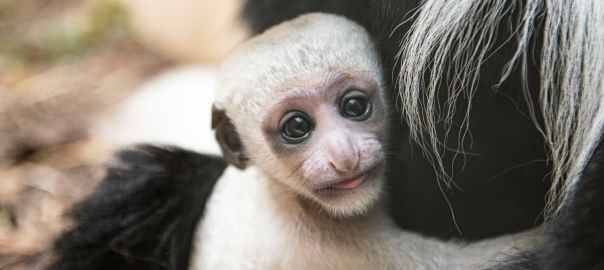
When species have babies with conspicuous fur, it can attract good attention—or bad. A new theory could explain why.

THE FIRST THING you might notice about the Delacour’s langur is its color. It’s got a jet black torso, limbs, and head, with a shaggy white butt sandwiched in the middle. (These monkeys—Trachypithecus delacouri if you want to get technical—quite literally look like Oreos.) But that’s just how the adults look. The babies are a different story: They’re orange.

This is their distinct “natal coat,” which fades after a few months. Babies from dozens of other primate species also have fur that’s a different color from that of adults. “One of the big questions has always been why—why would they have distinct coats?” asks Ted Stankowich, an evolutionary ecologist and Director of the Mammal Lab at California State University Long Beach.

Read the full story in WIRED

Could Being Cold Actually Be Good for You?

WIRED

Researchers are exploring the health benefits of literally chilling out.

NOBODY LIKES A frozen butt. So when François Haman attempts to recruit subjects to his studies on the health benefits of uncomfortable temperatures, he gets a lot of, well … cold shoulders. And he doesn’t blame them. “You’re not going to attract too many people,” says Haman, who studies thermal physiology at the University of Ottawa, Canada.

The human body is simply lousy at facing the cold. “I’ve done studies where people were exposed to 7 degrees Celsius [44.6 Fahrenheit], which is not even extreme. It’s not that cold. Few people could sustain it for 24 hours,” he says.

Read the full story in WIRED.

Surprise! The Pandemic Has Made People More Science Literate

WIRED

Despite rampant misinformation, Covid-19 has pushed science into the zeitgeist, as people have absorbed new words and how scientific discovery actually works.

FOR THREE GENERATIONS, Betsy Sneller’s family has sipped something they call “Cold Drink.” It’s a sweet mix of leftover liquids, stuff like orange juice and the remnants from cans of fruit, a concept devised by Sneller’s grandmother during the Great Depression. “All the little dregs get mixed together, and it tastes like a fruity concoction,” Sneller says. Cold Drink is an idea—and a name—born from crisis.

Sneller is now a sociolinguist at Michigan State University who studies how language changes in real time. For nearly two years, Sneller has analyzed weekly audio diaries from Michiganders to understand how the pandemic has influenced language in people of all ages, a project initially called MI COVID Diaries. “We find very commonly that people will come up with terms to reflect the social realities that they’re living through,” they say. “New words were coming up almost every week.” As Covid-19 sank its spikes into daily life, people added words and phrases to their vocabularies. Flatten the curve. Antibodies. Covidiots. “Shared crises, like the coronavirus pandemic, cause these astronomical leaps in language change,” Sneller says.

But Sneller has also noticed a more substantive trend emerging: People are internalizing, using, and remembering valuable scientific information. “Because the nature of this crisis is so science-oriented, we’re seeing that a broad swath of people are becoming a little bit more literate in infectious diseases,” they say.

Read the full story in WIRED.

Climate-Driven Extinction Made Mammals’ Teeth Less Weird

WIRED

Fossils show how species diversity—and dental diversity—suddenly collapsed 30 million years ago, suggesting a link between climate, diet, and survival.

DORIEN DE VRIES always asks for permission before flying across the world to touch someone else’s teeth. Some of the owners are anxious. Their teeth are fragile—irreplaceable. But de Vries, a paleontologist, sets their minds at ease. She knows how to be extra careful. “It’s exactly the same as dentists’,” she says of the gooey paste she uses to capture the tooth topography. “It sets really quickly and you can peel it off.” She casts the molds and then 3D-scans the replica teeth into digital immortality.

Well, maybe not exactly like a dentist. The teeth De Vries is working with are up to 56 million years old—they once belonged to the mammals of the late Eocene, Oligocene, and Miocene Epochs and are now preserved in museum and university collections.

Read the full story in WIRED.

This Protein Predicts a Brain’s Future after Traumatic Injury

WIRED

A blood test of “NfL” proteins answers questions about damage severity that doctors—and families—desperately need.

NEIL GRAHAM SEES a lot of head injuries: “Car accidents, violence, assault, gunshots, stabbing—the works, really,” says Graham, a neurologist from Imperial College London who practices at St. Mary’s Hospital nearby.

Doctors stop the bleeding, they relieve any pressure building inside the skull, maybe they’ll put the patient into a coma to keep the brain from overworking when it needs to relax and heal. Imaging can also help—to an extent. CT scans or MRIs pinpoint bruising or specks of hemorrhage in gray matter, the brain’s outer layer where neurons do most of their processing. But a clean scan isn’t a clean bill of health. Trauma to axons—a neuron’s root-like fibers that extend toward other neurons—often appears only in the deeper white matter, sometimes eluding simple scans.

Read the full story in WIRED.

Dolphins Eavesdrop on Each Other to Avoid Awkward Run-Ins

WIRED

The new finding underscores the complexity of marine mammals’ social life and cognition. It may also help save the snoopy cetaceans.

YOU’D THINK IT would be easier to spy on a Risso’s dolphin. The species frequents nearly every coast in the world. Their bulging heads and streaky gray and white patterning make them some of the most recognizable creatures in the ocean. And as with other cetaceans, they travel in groups and constantly chitchat: Clicks, buzzes, and whistles help them make sense of their underwater existence. Their social world is a sonic one.

“They’re a very vocal species,” says Charlotte Curé, a bioacoustics expert. “Sound is very important for them.”

Read the full story in WIRED

The Squishy, Far-Out New Experiments Headed to the ISS

WIRED

Muscle cells, 3D-printed lunar regolith, and le Blob will soon orbit 250 miles above Earth.

ON TUESDAY, NORTHROP Grumman’s Cygnus cargo spacecraft will haul slime mold, human muscle cells, 3D printer parts for simulated moon rocks, and a mishmash of other exploratory scientific projects to the International Space Station.

The ISS has a long history of hosting experiments designed by scientists eager to explore how rocket launch, microgravity, and handling by astronauts might affect well-established (but Earthly) phenomena. The technologies behind experiments aboard this week’s rocket range from advancing human space exploration to solving health problems on Earth.

A 3D “regolith” printer may end up on a future moon build, and muscle cells grown aboard the ISS may help find drugs to treat age-related muscle loss on Earth. The mesmerizingly complex growth of the slime mold, on the other hand, is largely meant to be educational; it’s aimed at entrancing the hundreds of thousands of students who will be following its progress.

Read the full story in WIRED.

What Rat Empathy May Reveal About Human Compassion

WIRED

Rats may feel concern when cage mates are trapped. But, like people, they don’t always care enough to help.

AGONY IS CONTAGIOUS. If you drop a thick textbook on your toes, circuits in your brain’s pain center come alive. If you pick it up and accidentally drop it on my toes, hurting me, an overlapping neural neighborhood will light up in your brain again.

“There’s a physiological mechanism for emotional contagion of negative responses like stress and pain and fear,” says Inbal Ben-Ami Bartal, a neuroscientist at Tel-Aviv University in Israel. That’s empathy. Researchers debate to this day whether empathy is a uniquely human ability. But more scientists are finding evidence suggesting it exists widely, particularly in social mammals like rats. For the past decade, Bartal has studied whether—and why—lab rodents might act on that commiseration to help pals in need.

Read the full story in WIRED