Tag Archives: Wired

A Hair Loss Study Raises New Questions About Aging Cells

WIRED

A protein secreted by seemingly dormant cells in skin moles causes hair to grow again. That’s a big—and potentially useful—surprise.

MAKSIM PLIKUS loves talking about hair. The cell biologist from the University of California, Irvine rattles off obscure facts: Sloth hair has a green tinge thanks to symbiotic algae; African crested rats evolved hollow hairs, which they slather with a pasty bark-derived toxin to defend themselves; his last name comes from a Latvian word for “bald.” Growing up in Eastern Europe (he’s neither Latvian nor bald, despite his name), Plikus aspired to do biomedical research. He joined a lab that had him dissecting rat whiskers under a microscope. It was hard, and his hands would shake. But eventually he got the hang of it. “I started to appreciate just the beauty of the follicle,” he says.
Read the full story in WIRED

The One-Shot Drug That Keeps On Dosing

WIRED

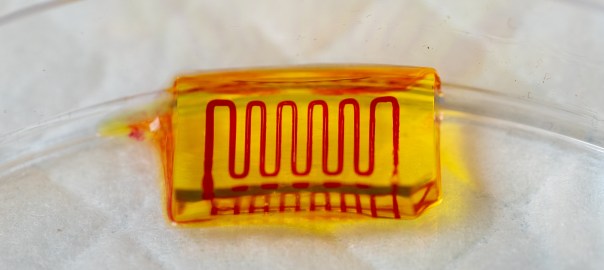
Chronic illness patients often struggle to keep up with medications that need frequent, timely doses. What if a single shot lasted for months?

ON AVERAGE, PATIENTS with chronic illnesses follow their prescribed treatments about 50 percent of the time. That’s a problem. If drugs aren’t taken regularly, on time, and in the right doses, the treatment may not work, and the person’s condition can worsen.

The issue isn’t that people are unwilling to take their prescriptions. It’s that some drugs, like HIV medications, require unwavering commitment. And essential medicines, like insulin, can be brutally expensive. Plus, the Covid pandemic illustrated the difficulties of delivering perishable follow-up vaccine shots to regions with no cold chain. “Are we really squeezing all the utility out of those drugs and vaccines?” asks Kevin McHugh, a bioengineer at Rice University. “The answer is, in general, no. And sometimes we’re missing out on a lot.”

Read the full story in WIRED

This Artificial Muscle Moves Stuff on Its Own

WIRED

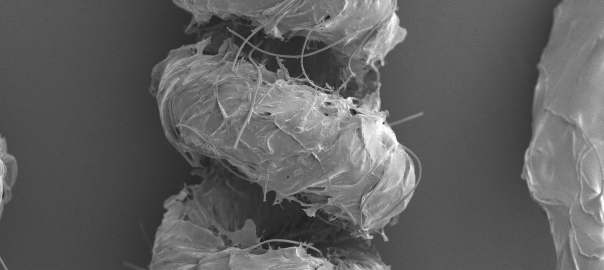
Actuators inspired by cucumber plants could make robots move more naturally in response to their environments, or be used for devices in inhospitable places.

IN THE PRODUCE section of a grocery store, the cucumber is mundane. But in the nursery section of a hardware store, says Shazed Aziz, the cucumber plant is a marvel.

A couple of years ago, Aziz strode through Bunnings Warehouse, an Australian hardware chain, making a beeline for a particular cucumber plant. The day before, he had noticed its peculiar tendrils—thin stems that jut out from the plant in coils of various sizes and that cucumber vines use to reach toward surfaces and pull themselves up to access more sunlight. On his first visit, those helix-like curls were long and loose. “When I returned to the store the next day, they were contracted,” says Aziz, a materials engineering postdoc at the University of Queensland.

Read the full story in WIRED

Everyone Was Wrong About Reverse Osmosis—Until Now

WIRED

A new paper showing how water actually travels through a plastic membrane could make desalination more efficient. That’s good news for a thirsty world.

MENACHEM ELIMELECH NEVER made peace with reverse osmosis. Elimelech, who founded Yale’s environmental engineering program, is something of a rock star among those who develop filtration systems that turn seawater or wastewater into clean drinking water. And reverse osmosis is a rock star among filter technologies: It has dominated how the world desalinates seawater for about a quarter of a century. Yet nobody really knew how it worked. And Elimelech hated that.

Read the full story in WIRED

The Modern World Is Aging Your Brain

WIRED

In a remote part of the Amazon, anthropologists and neuroscientists are learning about life and health without an “embarrassment of riches.”

BESIDE THE SCHOOLHOUSE turned medical station in the northern Bolivian village of Las Maras, everyone is waiting for breakfast. Today’s meal is rice and eggs, generously salted and adorned with globs of mayo: hearty fuel for a workday of foraging and hunting animals. Sheltering from the rain under palms, rubber trees, and a series of large tarps, the people are aged from 40 to 80-plus—all of them Tsimane, an Indigenous group living in the lowlands of the Amazon.

Each has been asked to fast until after they’ve had a voluntary medical exam. Blood draws. Urine and stool samples. Respiratory tests under one tarp; artery stiffness measurements under another. While they wait to speak with a doctor, people give interviews to fellow Tsimane who are collecting anthropological data. Later—if they desire—the interviewees will take a drive to the nearby city of Trinidad to get their brains scanned.

Read the full story in WIRED

This is the Lightest Paint in the World

WIRED

An energy-saving coating needs no pigments, and it keeps the surface beneath it 30 degrees cooler.

DEBASHIS CHANDA HAD trouble finding a physicist who could paint. The researchers in his nanoscience lab at the University of Central Florida had already worked out the kinks in the high-end machinery needed to create a revolutionary new kind of cooling paint. They had filled vials with vivid colors. But when it came time to show it off, they hit a wall. “We could barely draw a butterfly by hand, which is kind of a kid’s drawing,” says Chanda.

They did it anyway. The shape and the four-color design do look basic, but the simplicity is deceptive. If you zoom in deep—to invisible dimensions—this paint is almost nothing at all like the paint you know.

Read the full story in WIRED

This Lab-Grown Skin Could Revolutionize Transplants

WIRED

A new kind of “edgeless” engineered tissue can fit any irregular shape, paving the way for hand and face grafts that look and move better.

ALBERTO PAPPALARDO WAS nervous the morning before the transplant. He’d spent the previous month nurturing a cluster of skin cells until they reached their final form: a pinkish-white tissue in the shape of a mouse’s hindlimb that could be slipped onto the animal like a pant leg. If all went according to plan, the mouse’s surrounding skin would accept the lab-grown stuff as its own.

In the end, it took less than 30 seconds to position the new skin, and under 10 minutes to complete the whole procedure. “It was a perfect fit,” recalls Pappalardo, a medical doctor and postdoc focusing on dermatology and tissue engineering at Columbia University Medical Center. That’s a big deal, because it could help solve a persistent challenge in treating burns and other large wounds: how to cover irregular shapes with real, functional skin.

Read the full story in WIRED

This Fake Skin Fools Mosquitoes With Real Blood

WIRED

Research on new repellents and the viruses these insects carry relies on lab animals and human volunteers. What if there was a better option?

THE WORLD’S DEADLIEST animal is a picky eater. Because they transmit viral diseases like Zika and chikungunya, and the parasites that cause malaria, mosquitoes like blood-sucking Aedes aegypti are responsible for over 700,000 deaths worldwide every year.

But in Omid Veiseh’s lab at Rice University, his team of bioengineers was struggling to get mosquitoes to eat. Typically, researchers study mosquitoe feeding by letting them bite live animals—lab mice, or grad students and postdocs who offer up their arms for science. That’s not ideal, because lab animals can be expensive and impractical to work with, and their use can raise ethical issues. Student arms don’t scale well for large tests.

In collaboration with entomologists from Tulane University, the Rice team wanted to develop a way of studying mosquito behavior without the challenges of experimenting on large numbers of animals. Their solution was something totally different: real blood encased in a lifeless hydrogel. “It feels like jello,” Veiseh says. “The mosquitoes have to bite through the jello to get to the blood.” 

Read the full story in WIRED

The Case of the Incredibly Long-Lived Mouse Cells

WIRED

In a bizarre experiment, scientists kept the rodents’ immune T cells active four times longer than mice can live—with huge implications for cancer, vaccination, and aging research.

DAVID MASOPUST HAS long imagined how to push immune systems to their limits—how to rally the most powerful army of protective cells. But one of the big mysteries of immunology is that so far, nobody knows what those limits are. So he hatched a project: to keep mouse immune cells battle-ready as long as possible. “The idea was, let’s keep doing this until the wheels fall off the bus,” says Masopust, a professor of immunology at the University of Minnesota.

But the wheels never fell off. He was able to keep those mouse cells alive longer than anyone thought possible—indeed, much longer than the mice themselves.

Read the full story in WIRED

The World’s Farms Are Hooked on Phosphorus. It’s a Problem

WIRED

Half of the globe’s crop productivity comes from a key fertilizer ingredient that’s non-renewable—and literally washing away.

DISRUPTING EARTH’S CHEMICAL cycles brings trouble. But planet-warming carbon dioxide isn’t the only element whose cycle we’ve turned wonky—we’ve got a phosphorus problem too. And it’s a big one, because we depend on this element to grow the world’s crops. “I don’t know if it would be possible to have a full world without any mineral phosphorus fertilizer,” says Joséphine Demay, a PhD student at INRAE, France’s National Research Institute for Agriculture, Food and the Environment.

Since the 1800s, agriculturalists have known that elemental phosphorus is a crucial fertilizer. Nations quickly began mining caches of “phosphate rock,” minerals rich in the element. By the middle of the 20th century, companies had industrialized chemical processes to turn it into a form suitable for supercharging crops, hardening them against disease and making them able to support more people and livestock. That approach worked remarkably well: The post-World War II “Green Revolution” fed countless people thanks to fertilizers and pesticides. But sometimes there’s too much of a good thing.

Read the full story in WIRED