WIRED
Cartilage cells that contain fat explain why some skeletal tissues are less rigid than others, and could one day be grown in labs to produce better materials for performing reconstructive surgeries.

WIRED
Cartilage cells that contain fat explain why some skeletal tissues are less rigid than others, and could one day be grown in labs to produce better materials for performing reconstructive surgeries.

SEQUENCER
The genomes of extinct creatures like mammoths and giant sloths code for natural antibiotics we’ve never seen. So, now what?
César de la Fuente’s lab has a knack for finding antibiotics in usual places. He doesn’t trudge through swamps or remote forests like a pharmacological Indiana Jones. His lab instead combs through genetic data collected from creatures across all time.
In just the last few years, they’ve documented unreported antimicrobial compounds hidden in the genomes of Neanderthals, the world’s microbes, and within ourselves. Now, their latest feat carries the torch thanks to a brand new machine learning algorithm they call APEX: antibiotic peptide de-extinction.

WIRED
The preliminary results of a clinical trial of using heat exposure to combat depression are in—and are fueling cautious optimism that sauna practice could become an accepted treatment.
Depression runs hot. In the 1980s, psychiatrists began noticing that patients with depressive symptoms had higher body temperatures compared to people without, and that their body temperatures didn’t ebb and flow as much throughout the day. The more severe a patient’s depression, the higher their temperature tended to be.
Researchers have since noticed that when someone’s depression improves, their body temperature regularizes, “no matter how their depression got better—electroconvulsive therapy, psychotherapy, antidepressants, whatever,” says Ashley Mason, a clinical psychologist at the UC San Francisco Osher Center for Integrative Health. This got Mason thinking: If the two are linked, what happens to a depressed person’s symptoms if you provoke a change in their temperature?

WIRED
Scientists are finding a dynamic story in human physiology linked to frigid temperatures—a story that climate change may rewrite.
A bitter winter storm is sweeping across the north-east of North America this weekend, and is expected to bring significant snow to New York City for the first time in two years. Low temperatures around freezing are expected to last into next week.
If this is making you miserable, it’s because you, like most people, overwhelmingly prefer hot places. That group does not include Cara Ocobock, a biological anthropologist at University of Notre Dame who is one of the scientists trying to understand how the human body adjusts to extreme cold. “I just handle cold much better than I can handle heat,” says Ocobock.
Researchers like Ocobock have recently uncovered a variety of physiological adaptations linked to cold. Those range from anatomical to metabolic changes, and can stem from generations of natural selection or simply the short-term effects of acclimatization. These discoveries help people make practical decisions today, and most important to Ocobock, they hint at what we should expect in an increasingly capricious climate where winter cyclones freeze people in what are normally hot places, and heat waves make people swelter in what are normally icy ones.

WIRED
Extreme conditions caused by climate change are making winter sports more risky. From Colorado to Washington, that’s also making mountain rescue missions even more perilous.
Many people meet Dale Atkins for the first time on their worst days—ice climbers who are stranded and injured, skiers that have been swallowed by an avalanche. Atkins, a skilled mountaineer as well as a climatologist and former weather and avalanche forecaster, is one of the experts on Colorado’s Alpine Rescue Team that local sheriffs call to the rescue.

WIRED
A clinical trial reveals the first evidence of how the brain restructures physically in the first month on SSRIs—and the link between neuroplasticity and depression.
CLINICAL DEPRESSION IS considered one of the most treatable mood disorders, but neither the condition nor the drugs used against it are fully understood. First-line SSRI treatments (selective serotonin reuptake inhibitors) likely free up more of the neurotransmitter serotonin to improve communication between neurons. But the question of how SSRIs enduringly change a person’s mood has never returned completely satisfying answers.
In fact, SSRIs often don’t work. Scientists estimate that over 30 percent of patients don’t benefit from this class of antidepressants. And even when they do, the mood effects of SSRIs take several weeks to kick in, although chemically, they achieve their goal within a day or two. (SSRIs raise the levels of serotonin in the brain by blocking a “transporter” protein that decreases serotonin levels.) “It’s really been a puzzle to many people: Why this long time?” says Gitte Knudsen, a neurobiologist and neurologist at the University of Copenhagen, Denmark. “You take an antibiotic and it starts working immediately. That’s not been the case with the SSRIs.”
WIRED
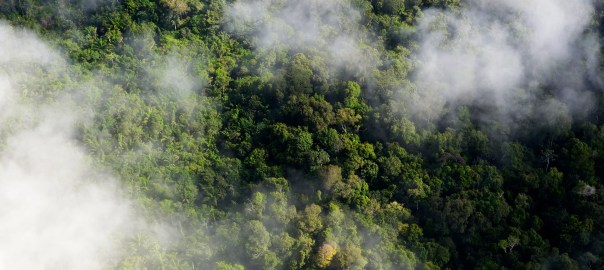
Trees make clouds by releasing small quantities of vapors called “sesquiterpenes.” Scientists are learning more—and it’s making climate models hazy.
EVERY YEAR BETWEEN September and December, Lubna Dada makes clouds. Dada, an atmospheric scientist, convenes with dozens of her colleagues to run experiments in a 7,000-gallon stainless steel chamber at CERN in Switzerland. “It’s like science camp,” says Dada, who studies how natural emissions react with ozone to create aerosols that affect the climate.
Clouds are the largest source of uncertainty in climate predictions. Depending on location, cloud cover can reflect sunlight away from land and ocean that would otherwise absorb its heat—a rare perk in the warming world. But clouds can also trap heat over Arctic and Antarctic ice. Scientists want to know more about what causes clouds to form, and if that effect is cooling or heating. And most of all, says Dada, “We want to know how we humans have changed clouds.”

WIRED
It may not be possible to eradicate the state’s tens of thousands of Burmese pythons. But the local wildlife is biting back—and humans wielding new tech can help.
WHILE DRIVING IN the swamplands some 40 miles west of Miami, Mike Kirkland noticed a log lying in the road ahead, so he and his colleague stepped out of their white GMC work truck. This was no log. “As we got closer, we realized it was a python,” he says. “It was so big, it looked like a fallen tree.” Kirkland asked the colleague to hang back, then crept to within five feet of the predator as it basked on the warm pavement.
“She saw me,” he says. “I’m 5’11”. And she picked herself up and practically looked me in the eye.” The snake’s sheer size gave him pause—but not for long. She stretched open her mouth, revealing dozens of curved teeth as sharp as daggers, then launched her head at Kirkland. He dodged a couple of strikes before spotting an opening to grab the snake’s head. The nonvenomous 17-foot constrictor then tried to wrap herself around the sweating Kirkland, who slipped through coil after coil. About 20 minutes later, the exhausted snake gave in, and Kirkland euthanized the animal.

WIRED
An unprecedented look at dopamine in the brain reveals that psychosis drugs get developed with the wrong neurons in mind.
ANTIPSYCHOTICS COME FROM a long line of accidents. In 1876, German chemists created a textile dye called methylene blue, which happened to also dye cells. It meandered into biology labs and, soon after, proved lethal against malaria parasites. Methylene blue became modern medicine’s first fully synthetic drug, lucking into gigs as an antiseptic and an antidote for carbon monoxide poisoning. Cue the spinoffs: A similar molecule, promethazine, became an antihistamine, sedative, and anesthetic. Other phenothiazines followed suit. Then, in 1952, came chlorpromazine.
After doctors sedated a manic patient for surgery, they noticed that chlorpromazine suppressed his mania. A series of clinical trials confirmed that the drug treated manic symptoms, as well as hallucinations and delusions common in psychoses like schizophrenia. The US Food and Drug Administration approved chlorpromazine in 1954. Forty different antipsychotics sprang up within 20 years. “They were discovered serendipitously,” says Jones Parker, a neuroscientist at Northwestern University. “So we don’t know what they actually do to the brain.”

WIRED
Extreme heat and other weather events are driving bears closer to humans’ campgrounds and hiking trails—and that’s no good for either species.
STEPS AWAY FROM the public restrooms in Yosemite Village, a buzzy stop in Yosemite National Park’s iconic valley, sits a brown metal dumpster. Visitors reach up to open the trash chute. Their peanut butter jars and apple cores tumble into a sealed compartment. The slot slams shut. Then, they clip a tethered steel carabiner through a loop, which prevents less dextrous creatures from getting access. “USE CLIP,” reads a sticker on the chute. “SAVE A BEAR.”
 Max G. Levy