Tag Archives: Science

A more electric language for biology

DDN

Bioelectricity is a potent lever for controlling health. What would it look like to treat the body electrically, rather than chemically?

When Kevin Tracey met 11-month-old Janice at New York Hospital, she was recovering from multiple bouts of sepsis after her grandmother accidentally spilled a pot of scalding water on her. Janice suffered severe burns to more than 90 percent of her body and, subsequently, septic shock — a life-threatening immune response to infection. Tracey, back in 1987, was a neurosurgery resident working the burn unit at what’s now the Weill Cornell Medical Center.

After three and a half weeks, Janice was ready to be discharged from the hospital. The day prior to being sent home, Tracey watched from a doorway as a nurse gave Janice a bottle, swaying with her gently in a rocking chair. Then, Janice’s eyes rolled back, and she died. Tracey attempted CPR for an hour — all efforts failed.

“As overwhelmingly sad as this was, it was even worse because I couldn’t answer her family’s questions about what happened,” Tracey recalled in a 2015 DARPA symposium keynote address.

Read the full story in the December issue of Drug Discovery News

New CRISPR Phase 1 trial hints at a first-of-its-kind heart treatment on horizon

Drug Discovery News

A gene therapy targeting ANTIGPTL3 reduced cholesterol and triglyceride levels simultaneously.

Elevated low-density lipoprotein (LDL) cholesterol and high triglycerides each affect about one in four adults worldwide. But a new CRISPR-Cas9 therapy may reduce the risk of major heart events caused by cholesterol and triglycerides.

LDL and triglycerides are risk factors for plaque buildup in heart disease. On Saturday morning, a team of researchers from Cleveland Clinic, CRISPR Therapeutics, Victorian Heart Institute, New Zealand Clinical Research, and Royal Adelaide Hospital published results in the New England Journal of Medicine from a 15-person Phase 1 trial of CTX310, which cut levels of both by about half.

Read the full story in Drug Discovery News

New therapies could regenerate the heart after heart failure

Drug Discovery News

New progress presented at an annual conference of the American Heart Association signals renewed hope to repair the heart after injury.

When heart failure doesn’t kill immediately, it kills slowly. The heart is said to “remodel” after injury but often can’t come back stronger. Injured sections lose their vital nerves, or gain back too many. Fibroblast cells thicken the pump’s walls with collagen. The adult heart scars, and this weakens its output.

The problem is that adult hearts aren’t programmed to bounce back to their prior abilities. Yet “everything you need to regenerate a heart should exist in the mammalian genome,” said Ahmed Mahmoud, who studies regenerative biology at the Sanford Burnham Prebys Medical Discovery Institute. “We know that early in life, the mammalian heart could actually do it by itself.” In 2011, Mahmoud and colleagues reported that mammals’ hearts can regenerate at very young ages: One-day-old mice recovered from having small slivers of their hearts cut out; seven-day-old mice didn’t.

Read the full story in Drug Discovery News

The quest to find out how our bodies react to extreme temperatures

MIT Technology Review

Scientists hope to prevent deaths from climate change, but heat and cold are more complicated than we thought.

It’s the 25th of June and I’m shivering in my lab-issued underwear in Fort Worth, Texas. Libby Cowgill, an anthropologist in a furry parka, has wheeled me and my cot into a metal-walled room set to 40 °F. A loud fan pummels me from above and siphons the dregs of my body heat through the cot’s mesh from below. A large respirator fits snug over my nose and mouth. The device tracks carbon dioxide in my exhales—a proxy for how my metabolism speeds up or slows down throughout the experiment. Eventually Cowgill will remove my respirator to slip a wire-thin metal temperature probe several pointy inches into my nose.

Cowgill and a graduate student quietly observe me from the corner of their so-called “climate chamber.” Just a few hours earlier I’d sat beside them to observe as another volunteer, a 24-year-old personal trainer, endured the cold. Every few minutes, they measured his skin temperature with a thermal camera, his core temperature with a wireless pill, and his blood pressure and other metrics that hinted at how his body handles extreme cold. He lasted almost an hour without shivering; when my turn comes, I shiver aggressively on the cot for nearly an hour straight.

I’m visiting Texas to learn about this experiment on how different bodies respond to extreme climates. “What’s the record for fastest to shiver so far?” I jokingly ask Cowgill as she tapes biosensing devices to my chest and legs. After I exit the cold, she surprises me: “You, believe it or not, were not the worst person we’ve ever seen.”

Read the story in the BODY issue of MIT Tech Review (Dec. 2025)

What we learn in the footsteps of wolves

Sequencer

Up close and personal with nature’s notoriously elusive carnivore.

In the summer of 1986, biologist L. David Mech crept over a hill on an island 500 miles from the North Pole and spotted a pack of white Arctic wolves. He’d spent days clambering over rocks and hiking across treeless ridges under 24-hour-daylight searching for a den. Few if any scientists had ever studied wolves at their dens. Mech had devoted nearly three decades to wolves, but rarely eavesdropped from the ground and never at a den. Now, 200 meters from his mattress, he counted one, two, three, four, five, six. Six five-week-old pups, along with seven adults, all unfazed by him and his ATV.

“It was the highlight of my life,” Mech later wrote in a National Geographic magazine. “After twenty-eight years, I had finally scored the Big One.” This marked the beginning of a renaissance in wolf biology that continues to this day; a renaissance that’s crept out of the Arctic and into wild and urban areas around the world.

Wolves are feared and revered from Norse and Roman mythology to Indigenous American tradition. In modern politics, they fracture public opinion over questions like What does it mean to conserve the wilderness? and at what cost to human lifestyles should we be protecting carnivores?

Wolves are elusive. Their internal and social lives are difficult to pin down. And our efforts to control them—even understand them—continuously turn up surprises.

Two recent books offer a rare lens into the lives of wolves. The Ellesmere Wolves, written by Mech and published in March, unfurls decades of observations of the world’s most tame wild wolf populations on the Canadian island of Ellesmere. Lone Wolf, from author Adam Weymouth, published in June, retraces the steps of Slavc, a wolf who famously journeyed across Europe alone in 2011 and 2012.

The contexts differ: Weymouth is a journalist following GPS data through beech forests, alpine prairies, and populated villages, discovering the grim political consequences of wolves’ success repopulating across Europe. Mech is a veteran field biologist documenting the world’s most remote Arctic wolves. Mech lived in close contact with wild wolves. He observed unprecedented behaviors around their dens like ambushing prey, and adults hugging chest-to-chest.

Yet, common themes emerge. Weymouth confronts the romantic ideal of a “lone wolf” who embarks on fiercely independent journeys. Mech, in his writings, confronts a wolf phenomenon that has transcended science into human culture—the alpha wolf.

“I think it’s really crucial to kind of tell these animal stories,” Weymouth told me. “But I do think those stories are really hard for people to connect to.”

Read the full story in Sequencer Magazine
The covert project to (finally) measure hellish subway heat

SEQUENCER MAG

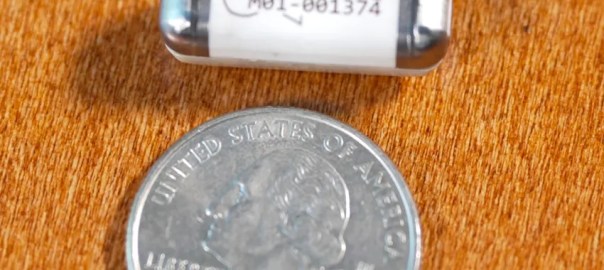
Meet Jack Klein, the guy who stealthily collects data about New York’s hottest days underground.

At 181st street in New York’s Washington Heights neighborhood, an August heat wave broils the asphalt, concrete, and any inch of skin exposed to the sun. Shade offers some relief, with one major exception: the underground. Washington Heights resides several hundred feet above lower Manhattan, so its subway stops are buried deeper underground. “People tell me, you’ve gotta go to the elevator inside 181stit’s an inferno,” said Jack Klein, founder of NewYorkLab, a guerilla project to study environmental conditions at subway stations.

Read the full story at Sequencer Magazine

Gene-edited stem cells aim to reverse rheumatoid arthritis

Drug Discovery News

A new approach for gene editing will get its shot in a common and chronic autoimmune disorder.

At the root of anything good or bad in the human immune system is a question about recognition. When the immune system functions correctly, it clocks unrecognized bacteria and viruses. When it misbehaves, immune cells misidentify the body’s tissue as its own. Such autoimmune disorders attack the pancreas in type 1 diabetes, nerve fibers in multiple sclerosis, and joints in rheumatoid arthritis (RA). Recognition also stifles the drugs designed to treat immune symptoms: Our bodies can develop drug-specific antibodies that target them.

Read the full story in Drug Discovery News