Tag Archives: Health

Saunas Are the Next Frontier in Fighting Depression

WIRED

The preliminary results of a clinical trial of using heat exposure to combat depression are in—and are fueling cautious optimism that sauna practice could become an accepted treatment.

Depression runs hot. In the 1980s, psychiatrists began noticing that patients with depressive symptoms had higher body temperatures compared to people without, and that their body temperatures didn’t ebb and flow as much throughout the day. The more severe a patient’s depression, the higher their temperature tended to be.

Researchers have since noticed that when someone’s depression improves, their body temperature regularizes, “no matter how their depression got better—electroconvulsive therapy, psychotherapy, antidepressants, whatever,” says Ashley Mason, a clinical psychologist at the UC San Francisco Osher Center for Integrative Health. This got Mason thinking: If the two are linked, what happens to a depressed person’s symptoms if you provoke a change in their temperature?
Read the full story in WIRED

Umbilical cord blood: a lifeline for pediatric diseases

DRUG DISCOVERY NEWS

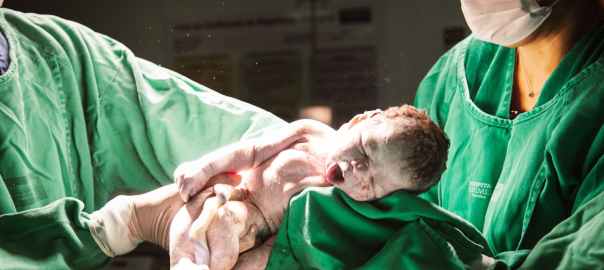
Doctors are recording a wave of wins using cord blood to heal sick children. The clinical evidence suggests that more wins may come.

Caridad Martinez has a bone to pick with bone marrow. In 2008, during her pediatric bone marrow transplant fellowship, Martinez met newborns with severe immunodeficiencies. Those patients’ bone marrow manufactured dysfunctional blood and immune cells. The kids were dying. The standard remedy was to fetch marrow from a donor to hopefully replace the faulty cells with healthier ones.

However, finding a bone marrow match can be hard, especially for racial and ethnic minorities. “You don’t have the same representation of donors,” said Martinez, who is now a bone marrow transplantation researcher at Baylor College of Medicine and a physician at Texas Children’s Hospital. White patients have a 79 percent chance of finding an unrelated donor; Black and African American patients have just a 29 percent chance (1). At the time of Martinez’s fellowship, marrow transplants were a stalwart in the field, but she noticed an urgent need to challenge the status quo. She found that opportunity with a then-budding type of transplant that she felt might be more accessible: transplanting blood from umbilical cords.

Read the full story in the February Issue of Drug Discovery News

How Your Body Adapts to Extreme Cold

WIRED

Scientists are finding a dynamic story in human physiology linked to frigid temperatures—a story that climate change may rewrite.

A bitter winter storm is sweeping across the north-east of North America this weekend, and is expected to bring significant snow to New York City for the first time in two years. Low temperatures around freezing are expected to last into next week.

If this is making you miserable, it’s because you, like most people, overwhelmingly prefer hot places. That group does not include Cara Ocobock, a biological anthropologist at University of Notre Dame who is one of the scientists trying to understand how the human body adjusts to extreme cold. “I just handle cold much better than I can handle heat,” says Ocobock.

Researchers like Ocobock have recently uncovered a variety of physiological adaptations linked to cold. Those range from anatomical to metabolic changes, and can stem from generations of natural selection or simply the short-term effects of acclimatization. These discoveries help people make practical decisions today, and most important to Ocobock, they hint at what we should expect in an increasingly capricious climate where winter cyclones freeze people in what are normally hot places, and heat waves make people swelter in what are normally icy ones.

Read the full story in WIRED

Snow Sports Are Getting More Dangerous

WIRED

Extreme conditions caused by climate change are making winter sports more risky. From Colorado to Washington, that’s also making mountain rescue missions even more perilous.

Many people meet Dale Atkins for the first time on their worst days—ice climbers who are stranded and injured, skiers that have been swallowed by an avalanche. Atkins, a skilled mountaineer as well as a climatologist and former weather and avalanche forecaster, is one of the experts on Colorado’s Alpine Rescue Team that local sheriffs call to the rescue.

Read the full story in WIRED

Why Antidepressants Take So Long to Work

WIRED

A clinical trial reveals the first evidence of how the brain restructures physically in the first month on SSRIs—and the link between neuroplasticity and depression.

CLINICAL DEPRESSION IS considered one of the most treatable mood disorders, but neither the condition nor the drugs used against it are fully understood. First-line SSRI treatments (selective serotonin reuptake inhibitors) likely free up more of the neurotransmitter serotonin to improve communication between neurons. But the question of how SSRIs enduringly change a person’s mood has never returned completely satisfying answers.

In fact, SSRIs often don’t work. Scientists estimate that over 30 percent of patients don’t benefit from this class of antidepressants. And even when they do, the mood effects of SSRIs take several weeks to kick in, although chemically, they achieve their goal within a day or two. (SSRIs raise the levels of serotonin in the brain by blocking a “transporter” protein that decreases serotonin levels.) “It’s really been a puzzle to many people: Why this long time?” says Gitte Knudsen, a neurobiologist and neurologist at the University of Copenhagen, Denmark. “You take an antibiotic and it starts working immediately. That’s not been the case with the SSRIs.”

Read the full story in WIRED

Rewiring cell communication to treat melanoma

Drug Discovery News

Exosomes show encouraging results for treating melanoma, offering potential benefits for targeted drug delivery and immunotherapy

When Susanne Gabrielsson first learned about exosomes, her eyes widened. In 1999, she’d just started a postdoctoral fellowship at the Curie Institute in Paris. Gabrielsson, an immunologist now at Sweden’s Karolinska Institute, thumbed through paper after paper describing which types of cells release these tiny blobs of information.

“I realized that since they were released from many cells, they probably would be released from all cells,” she said. “And that they would be a new means of communication.”

Read the full story in DDN September Issue

A Hair Loss Study Raises New Questions About Aging Cells

WIRED

A protein secreted by seemingly dormant cells in skin moles causes hair to grow again. That’s a big—and potentially useful—surprise.

MAKSIM PLIKUS loves talking about hair. The cell biologist from the University of California, Irvine rattles off obscure facts: Sloth hair has a green tinge thanks to symbiotic algae; African crested rats evolved hollow hairs, which they slather with a pasty bark-derived toxin to defend themselves; his last name comes from a Latvian word for “bald.” Growing up in Eastern Europe (he’s neither Latvian nor bald, despite his name), Plikus aspired to do biomedical research. He joined a lab that had him dissecting rat whiskers under a microscope. It was hard, and his hands would shake. But eventually he got the hang of it. “I started to appreciate just the beauty of the follicle,” he says.

Read the full story in WIRED

The One-Shot Drug That Keeps On Dosing

WIRED

Chronic illness patients often struggle to keep up with medications that need frequent, timely doses. What if a single shot lasted for months?

ON AVERAGE, PATIENTS with chronic illnesses follow their prescribed treatments about 50 percent of the time. That’s a problem. If drugs aren’t taken regularly, on time, and in the right doses, the treatment may not work, and the person’s condition can worsen.

The issue isn’t that people are unwilling to take their prescriptions. It’s that some drugs, like HIV medications, require unwavering commitment. And essential medicines, like insulin, can be brutally expensive. Plus, the Covid pandemic illustrated the difficulties of delivering perishable follow-up vaccine shots to regions with no cold chain. “Are we really squeezing all the utility out of those drugs and vaccines?” asks Kevin McHugh, a bioengineer at Rice University. “The answer is, in general, no. And sometimes we’re missing out on a lot.”

Read the full story in WIRED

Immunologists hack body rhythms for medicine

Drug Discovery News

The success of vaccines and cancer treatments varies depending on the time of day they are delivered. Researchers now look to exploit circadian rhythms to improve health outcomes.

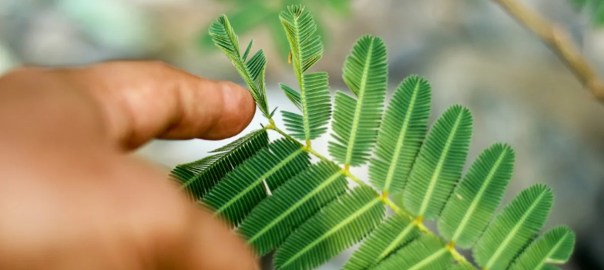
On a warm Parisian evening around 1729, the Seine river snailed past the Institut de France, inside which polymath Jean-Jacques Dortous de Mairan fixated on the slow movements of a plant (1). The fern-like leaves of his Mimosa pudica spread wide toward the sun during the day. Yet at night, the leaves furled back inward as if to sleep.

Dortous de Mairan intervened. He stowed the plant in the dark, wondering whether the cycle would hold. It did (2). Even without absorbing sunlight, the mimosa carried out its daily rhythm. 200 years passed before biologists appreciated the discovery as an internal clock and coined the term “circadian rhythm.”


“For a few centuries, people interested in circadian rhythms were mainly botanists,” said Nicolas Cermakian, a chronobiologist at McGill University.

Today, scientists understand the importance of daily rhythms. The human circadian system regulates sleep and the function of every tissue in the body. All organs and cells throughout the body have their own internal clocks, which cycle between different functions such as assembling particular proteins and receiving molecular messages. Disruptions like sleep deprivation, shift work, and even jet lag can deteriorate health by increasing the risk of metabolic disorders, cardiovascular disease, and cancer, and scientists’ understanding of human rhythms is rapidly evolving (3).

Read the full story in Drug Discovery News

The Modern World Is Aging Your Brain

WIRED

In a remote part of the Amazon, anthropologists and neuroscientists are learning about life and health without an “embarrassment of riches.”

BESIDE THE SCHOOLHOUSE turned medical station in the northern Bolivian village of Las Maras, everyone is waiting for breakfast. Today’s meal is rice and eggs, generously salted and adorned with globs of mayo: hearty fuel for a workday of foraging and hunting animals. Sheltering from the rain under palms, rubber trees, and a series of large tarps, the people are aged from 40 to 80-plus—all of them Tsimane, an Indigenous group living in the lowlands of the Amazon.

Each has been asked to fast until after they’ve had a voluntary medical exam. Blood draws. Urine and stool samples. Respiratory tests under one tarp; artery stiffness measurements under another. While they wait to speak with a doctor, people give interviews to fellow Tsimane who are collecting anthropological data. Later—if they desire—the interviewees will take a drive to the nearby city of Trinidad to get their brains scanned.

Read the full story in WIRED