Quanta Magazine
You don’t need 0s and 1s to perform computations, and in some cases it’s better to avoid them.

Quanta Magazine
You don’t need 0s and 1s to perform computations, and in some cases it’s better to avoid them.

SEQUENCER
The story of our not-so-Blue Marble
NOTE: This is the first story of mine for Sequencer, a writer-owned science magazine and newsletter that I’ve launched with three fellow science journalists that I admire. It would mean the world to me if you’d take a moment to subscribe here: https://www.sequencermag.com/
I spend a large portion of my work day feeling confused. I start my days bewildered by advances in niches of science that I only recently learned existed. Chatting with experts usually resolves my initial confusion, but immediately after spawns more: Every question begets an answer and more questions, ad infinitum.
To me, there’s no more jolting brand of bewilderment than doing a double take on the everyday things. New discoveries may lurk in the mundane. The ubiquitous, almost cartoonish image we have in our heads of the Earth might seem like a trivial matter now, but seriously, how did we get there?
So let’s first lay out what I mean by Earth’s appearance. How did we know how to draw Earth until we sent cameras and people into space to snap some pictures? Sure, we know that land is greenish, oceans are blueish, and that mapmakers have spent millenia tracing the contours of continents, but these details tell us about Earth’s appearance in theory more than in reality. Think of it this way: I know the color of my hair and skin, as well as the shape of my head and mouth, yet I still study the bathroom mirror in the morning to see who or what I’m working with that day. What about the appearance of that Earth—the “woke up like this” Earth?
Turns out this wasn’t a trivial problem; and in some ways, we kinda didn’t know what Earth actually looked like until we saw it from space.

WIRED
Scientists are finding a dynamic story in human physiology linked to frigid temperatures—a story that climate change may rewrite.
A bitter winter storm is sweeping across the north-east of North America this weekend, and is expected to bring significant snow to New York City for the first time in two years. Low temperatures around freezing are expected to last into next week.
If this is making you miserable, it’s because you, like most people, overwhelmingly prefer hot places. That group does not include Cara Ocobock, a biological anthropologist at University of Notre Dame who is one of the scientists trying to understand how the human body adjusts to extreme cold. “I just handle cold much better than I can handle heat,” says Ocobock.
Researchers like Ocobock have recently uncovered a variety of physiological adaptations linked to cold. Those range from anatomical to metabolic changes, and can stem from generations of natural selection or simply the short-term effects of acclimatization. These discoveries help people make practical decisions today, and most important to Ocobock, they hint at what we should expect in an increasingly capricious climate where winter cyclones freeze people in what are normally hot places, and heat waves make people swelter in what are normally icy ones.

WIRED
Despite rampant misinformation, Covid-19 has pushed science into the zeitgeist, as people have absorbed new words and how scientific discovery actually works.
FOR THREE GENERATIONS, Betsy Sneller’s family has sipped something they call “Cold Drink.” It’s a sweet mix of leftover liquids, stuff like orange juice and the remnants from cans of fruit, a concept devised by Sneller’s grandmother during the Great Depression. “All the little dregs get mixed together, and it tastes like a fruity concoction,” Sneller says. Cold Drink is an idea—and a name—born from crisis.
Sneller is now a sociolinguist at Michigan State University who studies how language changes in real time. For nearly two years, Sneller has analyzed weekly audio diaries from Michiganders to understand how the pandemic has influenced language in people of all ages, a project initially called MI COVID Diaries. “We find very commonly that people will come up with terms to reflect the social realities that they’re living through,” they say. “New words were coming up almost every week.” As Covid-19 sank its spikes into daily life, people added words and phrases to their vocabularies. Flatten the curve. Antibodies. Covidiots. “Shared crises, like the coronavirus pandemic, cause these astronomical leaps in language change,” Sneller says.
But Sneller has also noticed a more substantive trend emerging: People are internalizing, using, and remembering valuable scientific information. “Because the nature of this crisis is so science-oriented, we’re seeing that a broad swath of people are becoming a little bit more literate in infectious diseases,” they say.

ACS CHEMMATTERS
Take a minute to think about what you’re wearing right now. Not the colors or cuts of fabric you grabbed out of your closet this morning—but the textiles your clothes are made of.
Before your clothes became clothes, they were raw resources that were collected, processed, woven into textiles, then cut and sewn into the garments on your back. And their life cycle doesn’t end there. Nearly 90% of clothing takes an inevitable trip from closet to landfill. The problem is that although this process provides short-term convenience for customers and the fashion industry, in the long run, it’s not sustainable. Making and transporting clothes consumes raw materials and, at every step in the process, emits greenhouse gases.

Read the full story in ACS ChemMatters (Printed in the April 2021 Issue)

ACS CHEMMATTERS MAGAZINE
Sending astronauts to Mars has long felt like an outlandish dream—in part because we didn’t know how they would get back home. A new experiment on the Red Planet could change that.
Read the full story in ACS ChemMatters Magazine (Printed in February 2021 Issue)
SMITHSONIAN
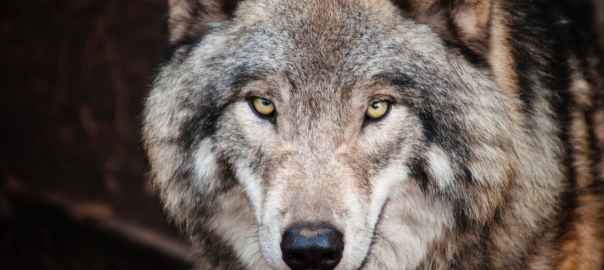
Experts say old, repurposed techniques and new technologies may be better than bullets at curbing attacks by the predators
Nestled amid butterscotch-scented Ponderosa pines in Idaho’s backcountry one sunny, summer day in 1991, Suzanne Stone scooped her hands around her chin and let out an “Ahwooooo.” Stone, now an expert in wolf restoration heading the International Wildlife Coexistence Network, was then an intern at the United States Fish and Wildlife Service (USFWS). After she sent two boisterous wolf howls rippling through nearby meadows, she listened curiously for a reply. Instead, a bullet from a distant rifle whistled just above her and her supervisor’s heads. Steve Fritts, a leading wolf scientist at USFWS, hurried Stone back to their car before reporting what happened. Hunting was legal in the area, but firing at federal employees—even unknowingly—was not. Federal investigators later traced the shot to a hunting outfitter hundreds of yards away.
“I knew then what wolves were facing in the backcountry,” she says. For nearly three decades, wolf populations in Idaho have been on the rise, pitting local communities and powerful interest groups against each other, a situation that plays out in many areas across the country where wolves exist. Hunters contend that wolves have fully recovered and now deplete elk and deer populations while some ranchers argue wolves need to be killed to keep livestock alive. Conservationists, on the other hand, say that the apex predators contribute vitally to a healthy ecosystem and are still functionally extinct in about 85 percent of their historic range.
In October, the Trump administration delisted gray wolves from the endangered species list, a move celebrated by the National Cattlemen’s Beef Association and Safari Club International, a hunter advocacy group, in a joint statement. The conservationist group Defenders of Wildlife, meanwhile, issued a statement of their own calling the delisting “premature and reckless.” They have joined other conservation groups to file a formal intent to sue the USFWS soon after the law takes effect in January.
ACS CHEMMATTERS MAGAZINE
Many modern products are geared toward making life easier. But scientists have found that creating these conveniences with “forever chemicals” sometimes leads to harmful side effects.
Read the full story in ACS ChemMatters Magazine (Printed in December 2020 Issue)

THE REVELATOR
Here’s what we know (and don’t know) about how dangerous PFAS chemicals travel ocean currents and harm wildlife — and what that could mean for humans.
In seabird after seabird, Anna Robuck found something concerning: per- and polyfluoroalkyl substances, or PFAS, lurking around vital organs.
“Brain, liver, kidney, lung, blood, heart,” Robuck says, rattling off a few hiding spots before pausing to recall the rest. Robuck, a Ph.D. candidate in chemical oceanography at the University of Rhode Island, quickly settles on a simpler response: She found the chemicals everywhere she looked.
PFAS — a group of synthetic chemicals — are often called “forever chemicals” due to their quasi-unbreakable molecular bonds and knack for accumulating in living organisms. That foreverness is less of a design flaw than a design feature: The stubborn, versatile molecules help weatherproof clothing; smother flames in firefighting foam; and withstand heat and grime on nonstick pans.
Through consumption and disposal, the chemicals seep into ecosystems and bodies, where they have been linked to cancers, pregnancy complications, and reproductive and immune dysfunction. Recent attention has focused on the prevalence of PFAS in drinking water.
“Over the past 10-15 years we’ve really developed this super negative picture of what PFAS do to humans,” Robuck says. “But we’ve barely scratched the surface of that in wildlife.”
 Max G. Levy