Tag Archives: Chemistry

The quest to find out how our bodies react to extreme temperatures

MIT Technology Review

Scientists hope to prevent deaths from climate change, but heat and cold are more complicated than we thought.

It’s the 25th of June and I’m shivering in my lab-issued underwear in Fort Worth, Texas. Libby Cowgill, an anthropologist in a furry parka, has wheeled me and my cot into a metal-walled room set to 40 °F. A loud fan pummels me from above and siphons the dregs of my body heat through the cot’s mesh from below. A large respirator fits snug over my nose and mouth. The device tracks carbon dioxide in my exhales—a proxy for how my metabolism speeds up or slows down throughout the experiment. Eventually Cowgill will remove my respirator to slip a wire-thin metal temperature probe several pointy inches into my nose.

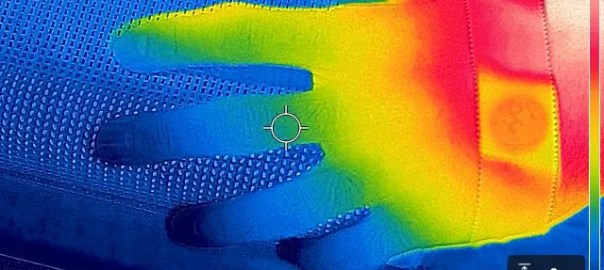
Cowgill and a graduate student quietly observe me from the corner of their so-called “climate chamber.” Just a few hours earlier I’d sat beside them to observe as another volunteer, a 24-year-old personal trainer, endured the cold. Every few minutes, they measured his skin temperature with a thermal camera, his core temperature with a wireless pill, and his blood pressure and other metrics that hinted at how his body handles extreme cold. He lasted almost an hour without shivering; when my turn comes, I shiver aggressively on the cot for nearly an hour straight.

I’m visiting Texas to learn about this experiment on how different bodies respond to extreme climates. “What’s the record for fastest to shiver so far?” I jokingly ask Cowgill as she tapes biosensing devices to my chest and legs. After I exit the cold, she surprises me: “You, believe it or not, were not the worst person we’ve ever seen.”

Read the story in the BODY issue of MIT Tech Review (Dec. 2025)

Nobody is making chocolate like this

Sequencer

What happens when you turn cacao into a microbiology experiment? Some damn good chocolate.

To say you “like chocolate” means almost nothing. There are people for whom chocolate means the rich soup of microwaved Ben & Jerry’s Phish Food; some gravitate to the syrupy bite of Hershey’s and others refuse to call Hershey’s “real” chocolate; there are the Lindt Lovers, Ferrero Rocher Freaks, and organic-bean-to-bar-fair-trade fans and stans. And then there’s Seamus Blackley, a physicist by training who didn’t think much about chocolate until he and mechanical engineer Asher Sefami began growing cacao trees in a secret lab just east of Los Angeles.

Read the full story in Sequencer

A Revelation About Trees Is Messing With Climate Calculations

WIRED

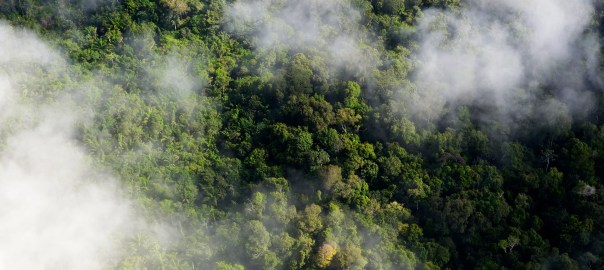
Trees make clouds by releasing small quantities of vapors called “sesquiterpenes.” Scientists are learning more—and it’s making climate models hazy.

EVERY YEAR BETWEEN September and December, Lubna Dada makes clouds. Dada, an atmospheric scientist, convenes with dozens of her colleagues to run experiments in a 7,000-gallon stainless steel chamber at CERN in Switzerland. “It’s like science camp,” says Dada, who studies how natural emissions react with ozone to create aerosols that affect the climate.

Clouds are the largest source of uncertainty in climate predictions. Depending on location, cloud cover can reflect sunlight away from land and ocean that would otherwise absorb its heat—a rare perk in the warming world. But clouds can also trap heat over Arctic and Antarctic ice. Scientists want to know more about what causes clouds to form, and if that effect is cooling or heating. And most of all, says Dada, “We want to know how we humans have changed clouds.”

Read the full story in WIRED

The One-Shot Drug That Keeps On Dosing

WIRED

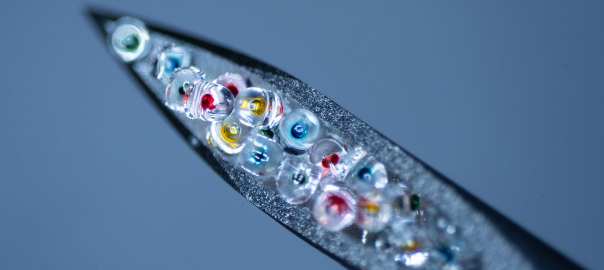
Chronic illness patients often struggle to keep up with medications that need frequent, timely doses. What if a single shot lasted for months?

ON AVERAGE, PATIENTS with chronic illnesses follow their prescribed treatments about 50 percent of the time. That’s a problem. If drugs aren’t taken regularly, on time, and in the right doses, the treatment may not work, and the person’s condition can worsen.

The issue isn’t that people are unwilling to take their prescriptions. It’s that some drugs, like HIV medications, require unwavering commitment. And essential medicines, like insulin, can be brutally expensive. Plus, the Covid pandemic illustrated the difficulties of delivering perishable follow-up vaccine shots to regions with no cold chain. “Are we really squeezing all the utility out of those drugs and vaccines?” asks Kevin McHugh, a bioengineer at Rice University. “The answer is, in general, no. And sometimes we’re missing out on a lot.”

Read the full story in WIRED

This Artificial Muscle Moves Stuff on Its Own

WIRED

Actuators inspired by cucumber plants could make robots move more naturally in response to their environments, or be used for devices in inhospitable places.

IN THE PRODUCE section of a grocery store, the cucumber is mundane. But in the nursery section of a hardware store, says Shazed Aziz, the cucumber plant is a marvel.

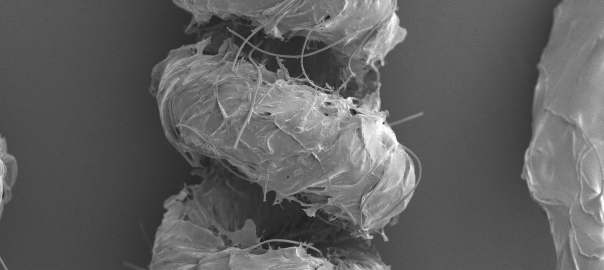
A couple of years ago, Aziz strode through Bunnings Warehouse, an Australian hardware chain, making a beeline for a particular cucumber plant. The day before, he had noticed its peculiar tendrils—thin stems that jut out from the plant in coils of various sizes and that cucumber vines use to reach toward surfaces and pull themselves up to access more sunlight. On his first visit, those helix-like curls were long and loose. “When I returned to the store the next day, they were contracted,” says Aziz, a materials engineering postdoc at the University of Queensland.

Read the full story in WIRED

Fighting Climate Change One Meal at a Time

CHEMMATTERS

Beth Zotter can talk about anything. The problems she encounters as chief executive officer (CEO) of a food company named Umaro are very specific. But the main focus is algae—which Zotter’s Umaro Foods claims is the future of abundant, sustainable protein—and its mission is to save our planet from climate calamity.

Read the full story in ChemMatters April Issue

From Pond Scum to Product: The Chemistry of Algae

CHEMMATTERS

The first time Beth Zotter tried her company’s bacon, it tasted bitter, and powdery. “Most protein concentrates don’t taste very well,” says Zotter, cofounder and chief executive officer of Umaro Foods. Umaro was attempting to re-create crispy, savory bacon out of seaweed.

Why bacon? “It’s America’s favorite food,” said co-founder Amanda Stiles on an episode of the TV show, “Shark Tank,” where the two raised funds for Umaro. “It’s the holy grail of plant-based meat. Sizzling, salty, delicious.” But the real magic of Umaro’s pitch was not the bacon. It was the algae.

Read the full story in ChemMatters April Issue

This is the Lightest Paint in the World

WIRED

An energy-saving coating needs no pigments, and it keeps the surface beneath it 30 degrees cooler.

DEBASHIS CHANDA HAD trouble finding a physicist who could paint. The researchers in his nanoscience lab at the University of Central Florida had already worked out the kinks in the high-end machinery needed to create a revolutionary new kind of cooling paint. They had filled vials with vivid colors. But when it came time to show it off, they hit a wall. “We could barely draw a butterfly by hand, which is kind of a kid’s drawing,” says Chanda.

They did it anyway. The shape and the four-color design do look basic, but the simplicity is deceptive. If you zoom in deep—to invisible dimensions—this paint is almost nothing at all like the paint you know.

Read the full story in WIRED