Category Archives: Uncategorized

The ‘Elegant’ Math Model That Could Help Rescue Coral Reefs

Quanta Magazine

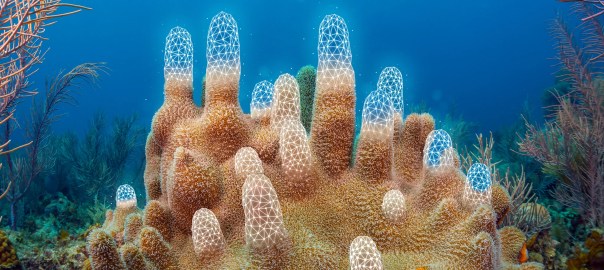
Physicists and marine biologists built a quantitative framework that predicts how coral polyps collectively construct a variety of coral shapes.

Since before she could remember, Eva Llabrés was a snorkeler. Her grandfather, a fishmonger from the Spanish island of Menorca, bought Llabrés her first mask and fins; throughout childhood, she was in the Mediterranean, spotting octopuses, eels, seagrasses and bright starfish. The ocean was a home, but in school, Llabrés preferred physics and math. In Barcelona for college, she dove into the theoretical mysteries of black holes and quantum gravity. After earning her doctorate, she changed gears: She wanted to come back to Earth, and she landed in the ocean. There, she found a world of unanswered questions in the physics of coral.

Read the full story in Quanta

I tried to train my color vision. Here’s what happened.

Sequencer

When I gamified my color blindness, I stumbled into the limits and latitudes of neuroplasticity.

One afternoon during my PhD, I took a break from lab work to snack on a banana. I grabbed a seat in the office, slid off my headphones, and peeled open my treat. Just as I bit in, I noticed a labmate staring at me.

“Max,” she told me, holding back some laughter. “That banana is a 4.”

I instantly knew what she meant because I’d made this mistake before. The banana was days from being ripe, and I had misjudged the color. A laughably green banana.

Even before I knew that I had mild deuteranomaly (so-called red-green colorblindness), I struggled with cryptic color schemes on spreadsheets and graphs. Whether in spite or because of this, color theory fascinated me. I had neurological, practical, and philosophical questions. Why do we call the retina’s longest wavelength cone “red” when it actually best absorbs yellow-green light? Why does mixing paint obey different rules than mixing light? If I could see through your eyes, would your mental images match mine — does your blue match my blue? And I had questions that blended all three, like what the hell is brown???

Read the full story in Sequencer Magazine

Everyone Was Wrong About Antipsychotics

WIRED

An unprecedented look at dopamine in the brain reveals that psychosis drugs get developed with the wrong neurons in mind.

ANTIPSYCHOTICS COME FROM a long line of accidents. In 1876, German chemists created a textile dye called methylene blue, which happened to also dye cells. It meandered into biology labs and, soon after, proved lethal against malaria parasites. Methylene blue became modern medicine’s first fully synthetic drug, lucking into gigs as an antiseptic and an antidote for carbon monoxide poisoning. Cue the spinoffs: A similar molecule, promethazine, became an antihistamine, sedative, and anesthetic. Other phenothiazines followed suit. Then, in 1952, came chlorpromazine.

After doctors sedated a manic patient for surgery, they noticed that chlorpromazine suppressed his mania. A series of clinical trials confirmed that the drug treated manic symptoms, as well as hallucinations and delusions common in psychoses like schizophrenia. The US Food and Drug Administration approved chlorpromazine in 1954. Forty different antipsychotics sprang up within 20 years. “They were discovered serendipitously,” says Jones Parker, a neuroscientist at Northwestern University. “So we don’t know what they actually do to the brain.”

Read the full story in WIRED

Bears Are Coming to a Campground Near You

WIRED

Extreme heat and other weather events are driving bears closer to humans’ campgrounds and hiking trails—and that’s no good for either species.

STEPS AWAY FROM the public restrooms in Yosemite Village, a buzzy stop in Yosemite National Park’s iconic valley, sits a brown metal dumpster. Visitors reach up to open the trash chute. Their peanut butter jars and apple cores tumble into a sealed compartment. The slot slams shut. Then, they clip a tethered steel carabiner through a loop, which prevents less dextrous creatures from getting access. “USE CLIP,” reads a sticker on the chute. “SAVE A BEAR.”

Read the full story in WIRED

A Hair Loss Study Raises New Questions About Aging Cells

WIRED

A protein secreted by seemingly dormant cells in skin moles causes hair to grow again. That’s a big—and potentially useful—surprise.

MAKSIM PLIKUS loves talking about hair. The cell biologist from the University of California, Irvine rattles off obscure facts: Sloth hair has a green tinge thanks to symbiotic algae; African crested rats evolved hollow hairs, which they slather with a pasty bark-derived toxin to defend themselves; his last name comes from a Latvian word for “bald.” Growing up in Eastern Europe (he’s neither Latvian nor bald, despite his name), Plikus aspired to do biomedical research. He joined a lab that had him dissecting rat whiskers under a microscope. It was hard, and his hands would shake. But eventually he got the hang of it. “I started to appreciate just the beauty of the follicle,” he says.

Read the full story in WIRED

The One-Shot Drug That Keeps On Dosing

WIRED

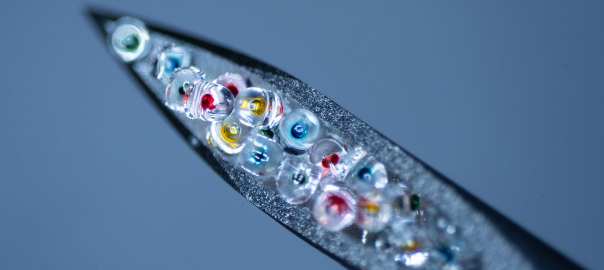
Chronic illness patients often struggle to keep up with medications that need frequent, timely doses. What if a single shot lasted for months?

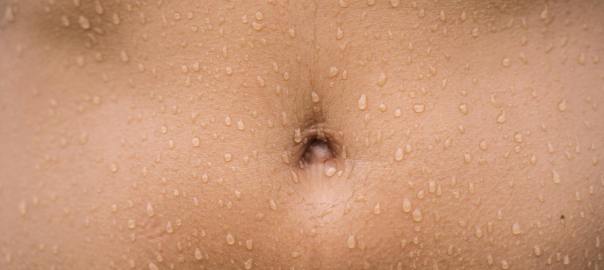
ON AVERAGE, PATIENTS with chronic illnesses follow their prescribed treatments about 50 percent of the time. That’s a problem. If drugs aren’t taken regularly, on time, and in the right doses, the treatment may not work, and the person’s condition can worsen.

The issue isn’t that people are unwilling to take their prescriptions. It’s that some drugs, like HIV medications, require unwavering commitment. And essential medicines, like insulin, can be brutally expensive. Plus, the Covid pandemic illustrated the difficulties of delivering perishable follow-up vaccine shots to regions with no cold chain. “Are we really squeezing all the utility out of those drugs and vaccines?” asks Kevin McHugh, a bioengineer at Rice University. “The answer is, in general, no. And sometimes we’re missing out on a lot.”

Read the full story in WIRED

This Artificial Muscle Moves Stuff on Its Own

WIRED

Actuators inspired by cucumber plants could make robots move more naturally in response to their environments, or be used for devices in inhospitable places.

IN THE PRODUCE section of a grocery store, the cucumber is mundane. But in the nursery section of a hardware store, says Shazed Aziz, the cucumber plant is a marvel.

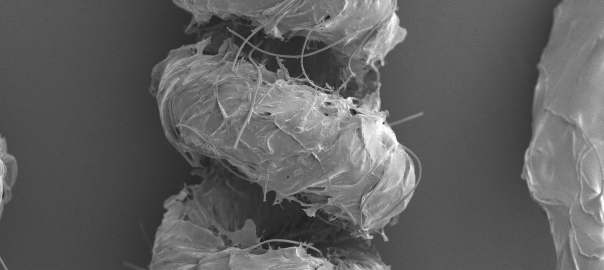
A couple of years ago, Aziz strode through Bunnings Warehouse, an Australian hardware chain, making a beeline for a particular cucumber plant. The day before, he had noticed its peculiar tendrils—thin stems that jut out from the plant in coils of various sizes and that cucumber vines use to reach toward surfaces and pull themselves up to access more sunlight. On his first visit, those helix-like curls were long and loose. “When I returned to the store the next day, they were contracted,” says Aziz, a materials engineering postdoc at the University of Queensland.

Read the full story in WIRED

Immunologists hack body rhythms for medicine

Drug Discovery News

The success of vaccines and cancer treatments varies depending on the time of day they are delivered. Researchers now look to exploit circadian rhythms to improve health outcomes.

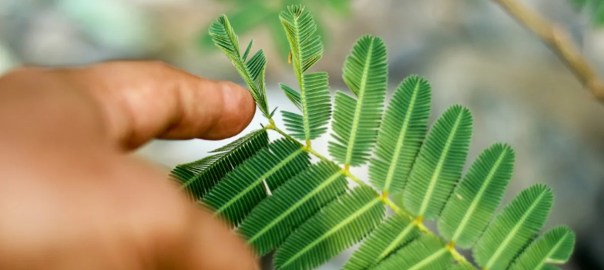
On a warm Parisian evening around 1729, the Seine river snailed past the Institut de France, inside which polymath Jean-Jacques Dortous de Mairan fixated on the slow movements of a plant (1). The fern-like leaves of his Mimosa pudica spread wide toward the sun during the day. Yet at night, the leaves furled back inward as if to sleep.

Dortous de Mairan intervened. He stowed the plant in the dark, wondering whether the cycle would hold. It did (2). Even without absorbing sunlight, the mimosa carried out its daily rhythm. 200 years passed before biologists appreciated the discovery as an internal clock and coined the term “circadian rhythm.”


“For a few centuries, people interested in circadian rhythms were mainly botanists,” said Nicolas Cermakian, a chronobiologist at McGill University.

Today, scientists understand the importance of daily rhythms. The human circadian system regulates sleep and the function of every tissue in the body. All organs and cells throughout the body have their own internal clocks, which cycle between different functions such as assembling particular proteins and receiving molecular messages. Disruptions like sleep deprivation, shift work, and even jet lag can deteriorate health by increasing the risk of metabolic disorders, cardiovascular disease, and cancer, and scientists’ understanding of human rhythms is rapidly evolving (3).

Read the full story in Drug Discovery News
For AI to Know What Something Is, It Must Know What Something Isn’t

Quanta Magazine

Today’s language models are more sophisticated than ever, but challenges with negation persist.

Nora Kassner suspected her computer wasn’t as smart as people thought. In October 2018, Google released a language model algorithm called BERT, which Kassner, a researcher in the same field, quickly loaded on her laptop. It was Google’s first language model that was self-taught on a massive volume of online data. Like her peers, Kassner was impressed that BERT could complete users’ sentences and answer simple questions. It seemed as if the large language model (LLM) could read text like a human (or better).

But Kassner, at the time a graduate student at Ludwig Maximilian University of Munich, remained skeptical. She felt LLMs should understand what their answers mean — and what they don’t mean. It’s one thing to know that a bird can fly. “A model should automatically also know that the negated statement — ‘a bird cannot fly’ — is false,” she said. But when she and her adviser, Hinrich Schütze, tested BERT and two other LLMs in 2019, they found that the models behaved as if words like “not” were invisible.

Read the full story in Quanta Magazine