Category Archives: Feature

A more electric language for biology

DDN

Bioelectricity is a potent lever for controlling health. What would it look like to treat the body electrically, rather than chemically?

When Kevin Tracey met 11-month-old Janice at New York Hospital, she was recovering from multiple bouts of sepsis after her grandmother accidentally spilled a pot of scalding water on her. Janice suffered severe burns to more than 90 percent of her body and, subsequently, septic shock — a life-threatening immune response to infection. Tracey, back in 1987, was a neurosurgery resident working the burn unit at what’s now the Weill Cornell Medical Center.

After three and a half weeks, Janice was ready to be discharged from the hospital. The day prior to being sent home, Tracey watched from a doorway as a nurse gave Janice a bottle, swaying with her gently in a rocking chair. Then, Janice’s eyes rolled back, and she died. Tracey attempted CPR for an hour — all efforts failed.

“As overwhelmingly sad as this was, it was even worse because I couldn’t answer her family’s questions about what happened,” Tracey recalled in a 2015 DARPA symposium keynote address.

Read the full story in the December issue of Drug Discovery News
The quest to find out how our bodies react to extreme temperatures

MIT Technology Review

Scientists hope to prevent deaths from climate change, but heat and cold are more complicated than we thought.

It’s the 25th of June and I’m shivering in my lab-issued underwear in Fort Worth, Texas. Libby Cowgill, an anthropologist in a furry parka, has wheeled me and my cot into a metal-walled room set to 40 °F. A loud fan pummels me from above and siphons the dregs of my body heat through the cot’s mesh from below. A large respirator fits snug over my nose and mouth. The device tracks carbon dioxide in my exhales—a proxy for how my metabolism speeds up or slows down throughout the experiment. Eventually Cowgill will remove my respirator to slip a wire-thin metal temperature probe several pointy inches into my nose.

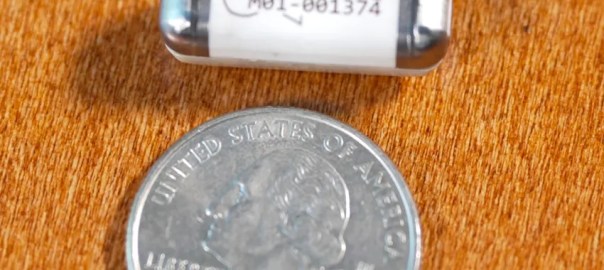
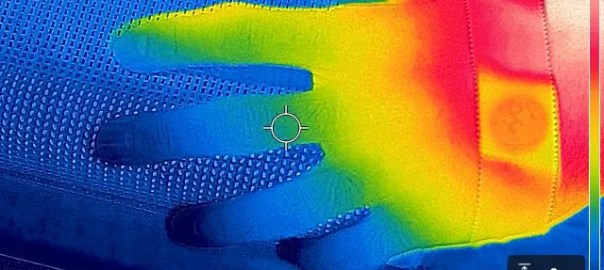
Cowgill and a graduate student quietly observe me from the corner of their so-called “climate chamber.” Just a few hours earlier I’d sat beside them to observe as another volunteer, a 24-year-old personal trainer, endured the cold. Every few minutes, they measured his skin temperature with a thermal camera, his core temperature with a wireless pill, and his blood pressure and other metrics that hinted at how his body handles extreme cold. He lasted almost an hour without shivering; when my turn comes, I shiver aggressively on the cot for nearly an hour straight.

I’m visiting Texas to learn about this experiment on how different bodies respond to extreme climates. “What’s the record for fastest to shiver so far?” I jokingly ask Cowgill as she tapes biosensing devices to my chest and legs. After I exit the cold, she surprises me: “You, believe it or not, were not the worst person we’ve ever seen.”

Read the story in the BODY issue of MIT Tech Review (Dec. 2025)

Nobody is making chocolate like this

Sequencer

What happens when you turn cacao into a microbiology experiment? Some damn good chocolate.

To say you “like chocolate” means almost nothing. There are people for whom chocolate means the rich soup of microwaved Ben & Jerry’s Phish Food; some gravitate to the syrupy bite of Hershey’s and others refuse to call Hershey’s “real” chocolate; there are the Lindt Lovers, Ferrero Rocher Freaks, and organic-bean-to-bar-fair-trade fans and stans. And then there’s Seamus Blackley, a physicist by training who didn’t think much about chocolate until he and mechanical engineer Asher Sefami began growing cacao trees in a secret lab just east of Los Angeles.

Read the full story in Sequencer

The Hidden World of Electrostatic Ecology

QUANTA MAGAZINE

Invisibly to us, insects and other tiny creatures use static electricity to travel, avoid predators, collect pollen and more. New experiments explore how evolution may have influenced this phenomenon.

Imagine, for a moment, that you’re a honeybee. In many ways, your world is small. Your four delicate wings, each less than a centimeter long, transport your half-gram body through looming landscapes full of giant animals and plants. In other ways, your world is expansive, even grand. Your five eyes see colors and patterns that humans can’t, and your multisensory antennae detect odors from distant flowers.

For years, biologists have wondered whether bees have another grand sense that we lack. The static electricity they accumulate by flying — similar to the charge generated when you shuffle across carpet in thick socks — could be potent enough for them to sense and influence surrounding objects through the air.

Read the full story in Quanta Magazine

Umbilical cord blood: a lifeline for pediatric diseases

DRUG DISCOVERY NEWS

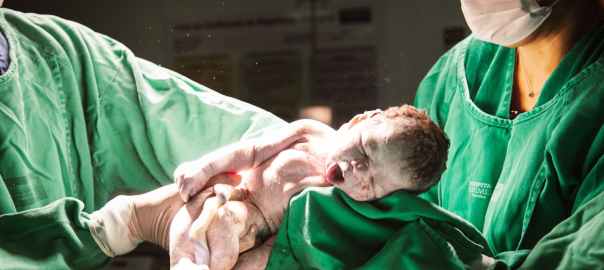
Doctors are recording a wave of wins using cord blood to heal sick children. The clinical evidence suggests that more wins may come.

Caridad Martinez has a bone to pick with bone marrow. In 2008, during her pediatric bone marrow transplant fellowship, Martinez met newborns with severe immunodeficiencies. Those patients’ bone marrow manufactured dysfunctional blood and immune cells. The kids were dying. The standard remedy was to fetch marrow from a donor to hopefully replace the faulty cells with healthier ones.

However, finding a bone marrow match can be hard, especially for racial and ethnic minorities. “You don’t have the same representation of donors,” said Martinez, who is now a bone marrow transplantation researcher at Baylor College of Medicine and a physician at Texas Children’s Hospital. White patients have a 79 percent chance of finding an unrelated donor; Black and African American patients have just a 29 percent chance (1). At the time of Martinez’s fellowship, marrow transplants were a stalwart in the field, but she noticed an urgent need to challenge the status quo. She found that opportunity with a then-budding type of transplant that she felt might be more accessible: transplanting blood from umbilical cords.

Read the full story in the February Issue of Drug Discovery News

Rewiring cell communication to treat melanoma

Drug Discovery News

Exosomes show encouraging results for treating melanoma, offering potential benefits for targeted drug delivery and immunotherapy

When Susanne Gabrielsson first learned about exosomes, her eyes widened. In 1999, she’d just started a postdoctoral fellowship at the Curie Institute in Paris. Gabrielsson, an immunologist now at Sweden’s Karolinska Institute, thumbed through paper after paper describing which types of cells release these tiny blobs of information.

“I realized that since they were released from many cells, they probably would be released from all cells,” she said. “And that they would be a new means of communication.”

Read the full story in DDN September Issue

From Pond Scum to Product: The Chemistry of Algae

CHEMMATTERS

The first time Beth Zotter tried her company’s bacon, it tasted bitter, and powdery. “Most protein concentrates don’t taste very well,” says Zotter, cofounder and chief executive officer of Umaro Foods. Umaro was attempting to re-create crispy, savory bacon out of seaweed.

Why bacon? “It’s America’s favorite food,” said co-founder Amanda Stiles on an episode of the TV show, “Shark Tank,” where the two raised funds for Umaro. “It’s the holy grail of plant-based meat. Sizzling, salty, delicious.” But the real magic of Umaro’s pitch was not the bacon. It was the algae.

Read the full story in ChemMatters April Issue