Is climate resilience possible in a world of borders?

SEQUENCER

We govern deforestation, agriculture, and biodiversity within our own borders. But unchecked sovereignty may be a mistake.

In January 2008, global rice prices shot to record highs. Shipping costs, a multi-year Australian drought, and erratic weather in Asia choked yields. In producer countries, the fear of dwindling stockpiles prompted the governments of India, Vietnam, Brazil, Egypt, and elsewhere to halt exports, safeguarding their own supplies but propelling prices up to four times higher than normal.

This meant trouble for countries reliant on foreign rice. Senegal, for example, has depended on grain imports since the 1800s when its French colonizers steered Senegal’s agriculture toward cash crops like peanuts, and instead imported rice from France’s Asian colonies. In 2008, the impact of these past decisions was civil instability: people protested against political leaders as many could not afford rice.

For most outside observers, this was bad enough, yet when the scarcity ended we quickly forgot about the crisis. But to Ariadna Anisimov, a postdoctoral researcher at the Institute of Development Policy at the University of Antwerp, this example is a quintessential case of “transboundary climate risk” that the world is ill equipped to handle in the future. For her, the link between climate change and societal instability couldn’t be clearer.

What makes the cautionary rice tale prototypical is its demonstration of not just the tangled web of climate and livelihoods around the world, but also the global consequences of domestic policies. Export bans shielded the producer at the expense of the market. For an importing country like Senegal to become self-sufficient in rice, they’d need major agricultural changes. But climate change was already affecting farmer’s yields through more variable rain and more salt in groundwater; and irrigating with river water remained both a touchy subject with neighboring countries and flooding risk.

“Rivers have been shifted, and turned, and irrigated to make barrages and hydropower,” Anisimov told me. “There’s always competing interests between the upstream and the downstream communities, and they have a lot of cascading effects, especially because rivers cross borders.”

Climate change’s drivers and hazards don’t obey borders, yet the laws and regulations meant to control them are confined within national boundaries. So how do we reckon with the fact that necessary climate action may be incompatible with how our entire world is organized?

Read the full story and support our work in Sequencer Magazine

Don’t step on this caterpillar

SEQUENCER

A Brazilian research institute is the only thing standing between a caterpillar sting and an untimely, grisly death.

In the 1990s, an unlikely culprit sparked an outbreak in southern Brazil. People poured into clinics with severe bruises and mysterious, gangrene-like symptoms. Some patients even suffered brain bleeds and died. The cases initially baffled researchers, who investigated patients’ accounts by probing the surrounding lands and trails. Site after site, they found Lonomia obliqua larvae: two-inch caterpillars with cactus-like spines out of their greenish brown bodies. 

You don’t want to mess with Lonomia obliqua’s prickly prepubescent hairs. If you touch or step on its clumps of spines, venom trickles into your bloodstream, carrying with it procoagulants that spread clots across your body. The venom can deplete your blood’s ability to clot when you actually need it, heightening the risk for internal bleeding and hemorrhage. Lonomia caterpillars cause painful, bloody deaths.

Brazilian officials recorded 600 stings between 1989 and 1996, including 12 deaths, cementing L. obliqua’s place as the world’s deadliest caterpillar. The situation has only gotten more dire: between 2007 and 2017, researchers documented more than 42,000 stings and roughly 250 serious poisonings—only now, there’s an antidote.

Read the full story and support our work in Sequencer Magazine

How Did We Draw The Planet Before We Actually Saw It?

SEQUENCER

The story of our not-so-Blue Marble

NOTE: This is the first story of mine for Sequencer, a writer-owned science magazine and newsletter that I’ve launched with three fellow science journalists that I admire. It would mean the world to me if you’d take a moment to subscribe here: https://www.sequencermag.com/

I spend a large portion of my work day feeling confused. I start my days bewildered by advances in niches of science that I only recently learned existed. Chatting with experts usually resolves my initial confusion, but immediately after spawns more: Every question begets an answer and more questions, ad infinitum.

To me, there’s no more jolting brand of bewilderment than doing a double take on the everyday things. New discoveries may lurk in the mundane. The ubiquitous, almost cartoonish image we have in our heads of the Earth might seem like a trivial matter now, but seriously, how did we get there?

So let’s first lay out what I mean by Earth’s appearance. How did we know how to draw Earth until we sent cameras and people into space to snap some pictures? Sure, we know that land is greenish, oceans are blueish, and that mapmakers have spent millenia tracing the contours of continents, but these details tell us about Earth’s appearance in theory more than in reality. Think of it this way: I know the color of my hair and skin, as well as the shape of my head and mouth, yet I still study the bathroom mirror in the morning to see who or what I’m working with that day. What about the appearance of that Earth—the “woke up like this” Earth?

Turns out this wasn’t a trivial problem; and in some ways, we kinda didn’t know what Earth actually looked like until we saw it from space.

Read the full story on Sequencer

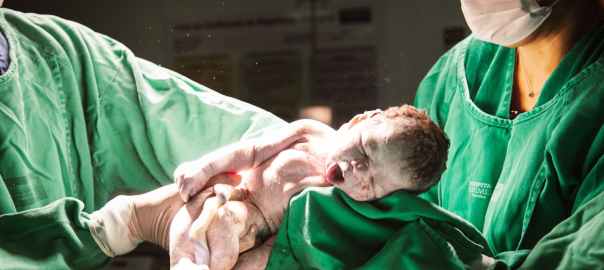
Umbilical cord blood: a lifeline for pediatric diseases

DRUG DISCOVERY NEWS

Doctors are recording a wave of wins using cord blood to heal sick children. The clinical evidence suggests that more wins may come.

Caridad Martinez has a bone to pick with bone marrow. In 2008, during her pediatric bone marrow transplant fellowship, Martinez met newborns with severe immunodeficiencies. Those patients’ bone marrow manufactured dysfunctional blood and immune cells. The kids were dying. The standard remedy was to fetch marrow from a donor to hopefully replace the faulty cells with healthier ones.

However, finding a bone marrow match can be hard, especially for racial and ethnic minorities. “You don’t have the same representation of donors,” said Martinez, who is now a bone marrow transplantation researcher at Baylor College of Medicine and a physician at Texas Children’s Hospital. White patients have a 79 percent chance of finding an unrelated donor; Black and African American patients have just a 29 percent chance (1). At the time of Martinez’s fellowship, marrow transplants were a stalwart in the field, but she noticed an urgent need to challenge the status quo. She found that opportunity with a then-budding type of transplant that she felt might be more accessible: transplanting blood from umbilical cords.

Read the full story in the February Issue of Drug Discovery News

How Your Body Adapts to Extreme Cold

WIRED

Scientists are finding a dynamic story in human physiology linked to frigid temperatures—a story that climate change may rewrite.

A bitter winter storm is sweeping across the north-east of North America this weekend, and is expected to bring significant snow to New York City for the first time in two years. Low temperatures around freezing are expected to last into next week.

If this is making you miserable, it’s because you, like most people, overwhelmingly prefer hot places. That group does not include Cara Ocobock, a biological anthropologist at University of Notre Dame who is one of the scientists trying to understand how the human body adjusts to extreme cold. “I just handle cold much better than I can handle heat,” says Ocobock.

Researchers like Ocobock have recently uncovered a variety of physiological adaptations linked to cold. Those range from anatomical to metabolic changes, and can stem from generations of natural selection or simply the short-term effects of acclimatization. These discoveries help people make practical decisions today, and most important to Ocobock, they hint at what we should expect in an increasingly capricious climate where winter cyclones freeze people in what are normally hot places, and heat waves make people swelter in what are normally icy ones.

Read the full story in WIRED

Snow Sports Are Getting More Dangerous

WIRED

Extreme conditions caused by climate change are making winter sports more risky. From Colorado to Washington, that’s also making mountain rescue missions even more perilous.

Many people meet Dale Atkins for the first time on their worst days—ice climbers who are stranded and injured, skiers that have been swallowed by an avalanche. Atkins, a skilled mountaineer as well as a climatologist and former weather and avalanche forecaster, is one of the experts on Colorado’s Alpine Rescue Team that local sheriffs call to the rescue.

Read the full story in WIRED

The Hidden Connection That Changed Number Theory

Quanta Magazine

Quadratic reciprocity lurks around many corners in mathematics. By proving it, number theorists reimagined their whole field.

There are three kinds of prime numbers. The first is a solitary outlier: 2, the only even prime. After that, half the primes leave a remainder of 1 when divided by 4. The other half leave a remainder of 3. (5 and 13 fall in the first camp, 7 and 11 in the second.) There is no obvious reason that remainder-1 primes and remainder-3 primes should behave in fundamentally different ways. But they do.

Read the full story in Quanta

Why Antidepressants Take So Long to Work

WIRED

A clinical trial reveals the first evidence of how the brain restructures physically in the first month on SSRIs—and the link between neuroplasticity and depression.

CLINICAL DEPRESSION IS considered one of the most treatable mood disorders, but neither the condition nor the drugs used against it are fully understood. First-line SSRI treatments (selective serotonin reuptake inhibitors) likely free up more of the neurotransmitter serotonin to improve communication between neurons. But the question of how SSRIs enduringly change a person’s mood has never returned completely satisfying answers.

In fact, SSRIs often don’t work. Scientists estimate that over 30 percent of patients don’t benefit from this class of antidepressants. And even when they do, the mood effects of SSRIs take several weeks to kick in, although chemically, they achieve their goal within a day or two. (SSRIs raise the levels of serotonin in the brain by blocking a “transporter” protein that decreases serotonin levels.) “It’s really been a puzzle to many people: Why this long time?” says Gitte Knudsen, a neurobiologist and neurologist at the University of Copenhagen, Denmark. “You take an antibiotic and it starts working immediately. That’s not been the case with the SSRIs.”

Read the full story in WIRED

A Revelation About Trees Is Messing With Climate Calculations

WIRED

Trees make clouds by releasing small quantities of vapors called “sesquiterpenes.” Scientists are learning more—and it’s making climate models hazy.

EVERY YEAR BETWEEN September and December, Lubna Dada makes clouds. Dada, an atmospheric scientist, convenes with dozens of her colleagues to run experiments in a 7,000-gallon stainless steel chamber at CERN in Switzerland. “It’s like science camp,” says Dada, who studies how natural emissions react with ozone to create aerosols that affect the climate.

Clouds are the largest source of uncertainty in climate predictions. Depending on location, cloud cover can reflect sunlight away from land and ocean that would otherwise absorb its heat—a rare perk in the warming world. But clouds can also trap heat over Arctic and Antarctic ice. Scientists want to know more about what causes clouds to form, and if that effect is cooling or heating. And most of all, says Dada, “We want to know how we humans have changed clouds.”

Read the full story in WIRED

Rewiring cell communication to treat melanoma

Drug Discovery News

Exosomes show encouraging results for treating melanoma, offering potential benefits for targeted drug delivery and immunotherapy

When Susanne Gabrielsson first learned about exosomes, her eyes widened. In 1999, she’d just started a postdoctoral fellowship at the Curie Institute in Paris. Gabrielsson, an immunologist now at Sweden’s Karolinska Institute, thumbed through paper after paper describing which types of cells release these tiny blobs of information.

“I realized that since they were released from many cells, they probably would be released from all cells,” she said. “And that they would be a new means of communication.”

Read the full story in DDN September Issue