All posts by Max G. Levy

Unknown's avatar

About Max G. Levy

Science Journalist

A New Way to Restore Mobility–With an Electrified Patch

WIRED

In a clinical trial, wearing a small stimulator on their necks helped people with quadriplegia build back movement they had lost years ago.

THE PROVERBIAL STORY of overcoming paralysis tends to start with the legs: Superman vows to walk again; a soap opera character steps out of their wheelchair. “I think society has a tendency to focus solely on the walking aspect of disability,” says Ian Ruder, a magazine editor with the United Spinal Association, a nonprofit advocacy group for people with spinal cord injuries and disorders. But Ruder, who has used a wheelchair following an injury 23 years ago, says even restoring just a fraction of his hand function would improve his quality of life more than walking. “The difference between being able to pinch with my thumb and not be able to pinch with my thumb is hard to understand for most people,” Ruder says. “That would unlock a whole new level of independence.”

Read the full story in WIRED

New Quantum Algorithms Finally Crack Nonlinear Equations

QUANTA MAGAZINE

Two teams found different ways for quantum computers to process nonlinear systems by first disguising them as linear ones.

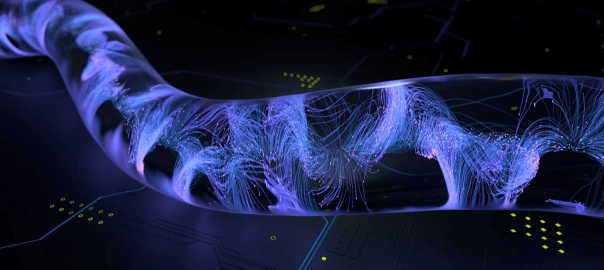
Sometimes, it’s easy for a computer to predict the future. Simple phenomena, such as how sap flows down a tree trunk, are straightforward and can be captured in a few lines of code using what mathematicians call linear differential equations. But in nonlinear systems, interactions can affect themselves: When air streams past a jet’s wings, the air flow alters molecular interactions, which alter the air flow, and so on. This feedback loop breeds chaos, where small changes in initial conditions lead to wildly different behavior later, making predictions nearly impossible — no matter how powerful the computer.

“This is part of why it’s difficult to predict the weather or understand complicated fluid flow,” said Andrew Childs, a quantum information researcher at the University of Maryland. “There are hard computational problems that you could solve, if you could [figure out] these nonlinear dynamics.”

That may soon be possible. In separate studies posted in November, two teams — one led by Childs, the other based at the Massachusetts Institute of Technology — described powerful tools that would allow quantum computers to better model nonlinear dynamics.

Read the full story in Quanta Magazine

These Non-Lethal Methods Encouraged by Science Can Keep Wolves From Killing Livestock

SMITHSONIAN

Experts say old, repurposed techniques and new technologies may be better than bullets at curbing attacks by the predators

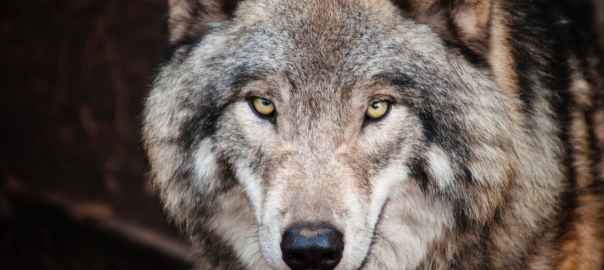
Nestled amid butterscotch-scented Ponderosa pines in Idaho’s backcountry one sunny, summer day in 1991, Suzanne Stone scooped her hands around her chin and let out an “Ahwooooo.” Stone, now an expert in wolf restoration heading the International Wildlife Coexistence Network, was then an intern at the United States Fish and Wildlife Service (USFWS). After she sent two boisterous wolf howls rippling through nearby meadows, she listened curiously for a reply. Instead, a bullet from a distant rifle whistled just above her and her supervisor’s heads. Steve Fritts, a leading wolf scientist at USFWS, hurried Stone back to their car before reporting what happened. Hunting was legal in the area, but firing at federal employees—even unknowingly—was not. Federal investigators later traced the shot to a hunting outfitter hundreds of yards away.

“I knew then what wolves were facing in the backcountry,” she says. For nearly three decades, wolf populations in Idaho have been on the rise, pitting local communities and powerful interest groups against each other, a situation that plays out in many areas across the country where wolves exist. Hunters contend that wolves have fully recovered and now deplete elk and deer populations while some ranchers argue wolves need to be killed to keep livestock alive. Conservationists, on the other hand, say that the apex predators contribute vitally to a healthy ecosystem and are still functionally extinct in about 85 percent of their historic range.

In October, the Trump administration delisted gray wolves from the endangered species list, a move celebrated by the National Cattlemen’s Beef Association and Safari Club International, a hunter advocacy group, in a joint statement. The conservationist group Defenders of Wildlife, meanwhile, issued a statement of their own calling the delisting “premature and reckless.” They have joined other conservation groups to file a formal intent to sue the USFWS soon after the law takes effect in January.

Read the full story in Smithsonian

Extreme Adventures and Saving the Planet | Q&A With a Sustainable Chemist

ACS CHEMMATTERS

Laura Hoch’s career began with a murder. Well, not a real murder—a murder-mystery game staged by her high school chemistry teachers in central Pennsylvania.

“There would be all these clues, and then you put together a forensic report based on all you’ve been able to find out by analyzing stuff,” she says. “It wasn’t on my radar to be a chemist, but I just had that memory of chemistry being really fun and interesting.”

Read the full story and Q&A in ACS ChemMatters Magazine (Printed in December 2020 Issue)

‘Symbiosis/Dysbiosis’ VR art installation will let you see, feel, hear the invisible

MASSIVE SCIENCE

Tosca Terán and Sara Lisa Vogl speak with Massive about stimulating senses in their art

Nature can feel you. Its roots, leaves, and vegetative filaments don’t sense with fingertips or retinas. But they can feel your approach and touch, react accordingly.

In a forthcoming art installation for the Goethe-Institut’s New Nature project, a group of artists want to translate these alien sensations and immerse you in their world. Their “Symbiosis/Dysbiosis” uses fungi, electrodes, lights, sound, and virtual reality to launch you in the microbiome all around you.

Read the full story and Q&A in Massive Science

What Human Hair Reveals About Death’s Seasonality

SAPIENS

A new study demonstrates a method for deciphering the timing of a deceased person’s death using a lock of hair.

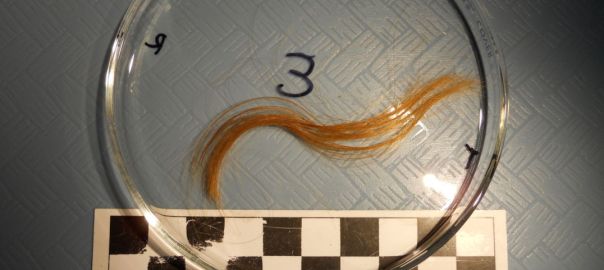
Each wave of Edith Howard Cook’s reddish-blonde hair tells a story. One segment may chronicle an unusually damp San Francisco summer; another may recall a dry December. But read in their entirety, the strands reveal the season in 1876 when 2-year-old Edith passed away.

Archaeologist Jelmer Eerkens helped identify Edith after a construction crew discovered her remains in a backyard in 2016. “I have kids myself,” says Eerkens, an archaeologist at the University of California, Davis. “So, I oftentimes think about living in the 1800s. And children dying was just a common thing.”

By 1900, for example, children under the age of 5 accounted for 30 percent of all deaths in the U.S.—often from tuberculosis and flu, which fluctuate with the seasons. “Your kid gets sick: Are they going to die? Are they going to live? It must have been heart-wrenching,” Eerkens notes.

In a new study published in the American Journal of Physical Anthropology, Eerkens and his colleagues introduce a method to decode the season of an individual’s death using hair.

Read the full story in SAPIENS

Republished by The Atlantic

A Slime Mold Can Change Its Mind

SCIENCE FRIDAY

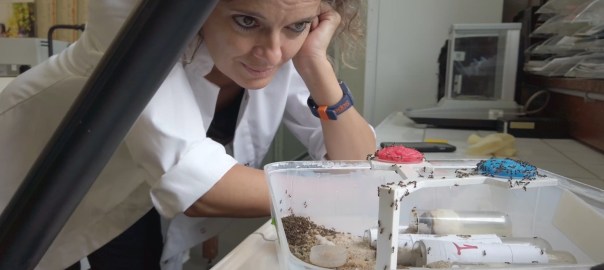
From ant colonies to single-celled slime mold, biologist Audrey Dussutour explores the wonders of animal cognition.

Audrey Dussutour is not shy about admitting that her career, and fame, is a bit of an accident. The French specialist in animal behavior didn’t set out to make discoveries about slime minds, or to write a hugely popular book (Le Blob) about the single-celled learners. “It was not my wish to work on slime molds at all,” Dussutour told Massive, letting out a slow sigh. The first time she saw the organism, as a postdoctoral fellow in Australia, she thought, “My gosh it’s really disgusting. What can I do with this thing?”

Dussutour radiates an infectious passion for slime molds. “It’s one of the most interesting systems to study because it’s a single cell, but you can actually see it with your naked eye,” she says. Now a researcher at France’s National Center for Scientific Research, Dussutour studies how ant colonies and patches of slime molds — neither of which have a central brain — can make decisions with distributed intelligence and emergent plasticity.

Read the full story and Q&A at Science Friday or Massive Science

Wacky tube men could keep dingoes away from livestock in Australia

SCIENCE MAGAZINE

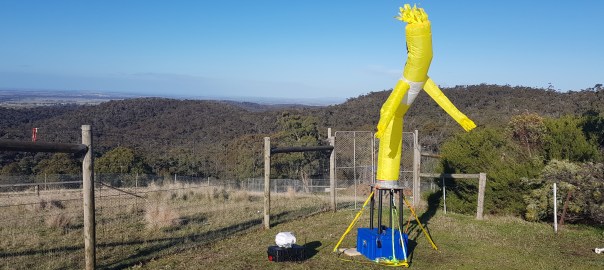
Inflatable tube men—those wacky, wriggling figures that tower near car dealerships and mattress stores—are typically designed to grab attention. But scientists in Australia have used them for the opposite purpose: to scare away unwanted onlookers. A new study suggests the unpredictable movements of these dancing eyesores could keep wild dingoes from killing livestock.

Read the full story in Science Magazine

Anuses can have teeth, farts can be weapons, butts can be homes: an interview with a farts expert

MASSIVE SCIENCE

Zoologist and butt book author Dani Rabaiotti on the worst fart she ever smelled and what new fart research she’d like to see

You’re probably here for the same reason I am: because farts are amazing. A single pffff, poot, or squeak, can plug nostrils, crack smiles, and break tensions. I want to talk about farts.

Dani Rabaiotti is a zoologist based in London who wrote a best-selling book on farts in 2017 called Does it Fart? She and her co-author, ecologist Nick Caruso, along with illustrator Ethan Kocak, followed a trail of animal communication science that is criminally undercovered. In this Q&A, she shares her most memorable farts (a seal’s, not her’s), why cat farts are so bad, the unsolved mysteries of butt-borne defense tactics, and so much more.

Read the full story and Q&A in Massive Science