Tag Archives: Wired

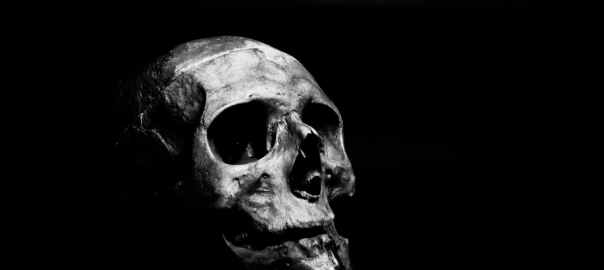
If You Transplant a Human Head, Does Its Consciousness Follow?

WIRED

In her new book, Brandy Schillace recalls the unbelievable legacy of a Cold War era neurosurgeon’s mission to preserve the soul.

BRANDY SCHILLACE SOMETIMES writes fiction, but her new book is not that. Schillace, a medical historian, promises that her Cold War-era tale of a surgeon, neuroscientist, and father of 10 obsessed with transplanting heads is true from start to finish.

Schillace came across the story behind her book, Mr. Humble and Dr. Butcher, somewhat serendipitously: One day, her friend, Cleveland neurologist Michael DeGeorgia, called her to his office. He quietly slid a battered shoebox toward her, inviting her to open it. Schillace obliged, half-worried it might contain a brain. She pulled out a notebook—perhaps from the ‘50s or ‘60s, she says—and started to leaf through it.

“There’s all these strange little notes and stuff about mice and brains and brain slices, and these little flecks,” Schillace says. “I was like, ‘What … what are all these marks?’”

Probably blood, DeGeorgia told her. The blood-flecked notebook belonged to Robert White, a neurosurgeon who spent decades performing head transplants on monkeys, hoping to eventually use the procedure to give human brains new bodies.

Read the full story and Q&A in WIRED

Twinkling Black Holes Reveal an Invisible Cloud in Our Galaxy

WIRED

Cosmic radio backlights are helping scientists size up “missing” forms of matter and might offer clues about what makes up the universe.

AT FIRST, YUANMING Wang was not excited. More relieved, maybe. The first -year astrophysics PhD student at the University of Sydney sat in front of her computer, looking at images in which she’d found the signs of radio waves from distant galaxies twinkling, just as she had hoped. But because Wang’s discovery relied more on scouring ones and zeros than peering through a telescope—and the discovery itself was just plain weird—it took awhile for the moment to hit.

Read the full story in WIRED

How and Why to Watch NASA’s Perseverance Mars Rover Landing

WIRED

NASA’s biggest and boldest rover attempts a momentous landing on February 18

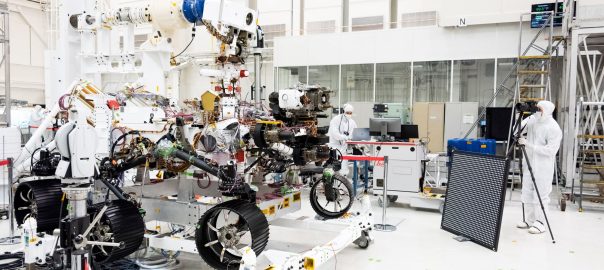
On Thursday afternoon, Perseverance, NASA’s most ambitious self-driving rover, will attempt the agency’s most challenging Mars landing. Perseverance is carrying a suite of science experiments that will search for signs of life, launch a drone helicopter, and record the planet’s audio for the first time. But conducting those experiments relies solely on whether “Percy” can stick the landing.

Read the full story in WIRED

Researchers Levitated a Small Tray Using Nothing but Light

WIRED

One day a “magic carpet” based on this light-induced flow technology could carry climate sensors high in the atmosphere—wind permitting.

IN THE BASEMENT of a University of Pennsylvania engineering building, Mohsen Azadi and his labmates huddled around a set of blinding LEDs set beneath an acrylic vacuum chamber. They stared at the lights, their cameras, and what they hoped would soon be some action from the two tiny plastic plates sitting inside the enclosure. “We didn’t know what we were expecting to see,” says Azadi, a mechanical engineering PhD candidate. “But we hoped to see something.”

Let’s put it this way: They wanted to see if those plates would levitate, lofted solely by the power of light.

Read the full story in WIRED

Forget Blood—Your Skin Might Know If You’re Sick

WIRED

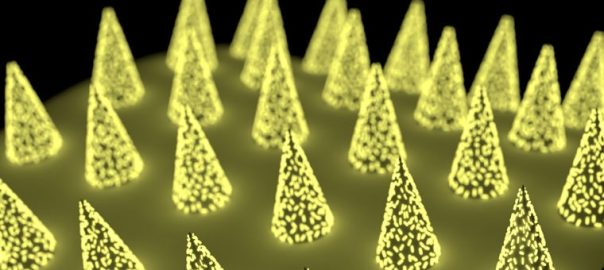
This glowing microneedle test could catalyze a transition from blood-based diagnostics to a stick-on patch.

A RIVER OF biological information flows just beneath the outermost layers of your skin, in which a hodgepodge of proteins squeeze past each other through the interstitial fluid surrounding your cells. This “interstitium” is an expansive and structured space, making it, to some, a newfound “organ.” But its wealth of biomarkers for conditions like tuberculosis, heart attacks, and cancer has attracted growing attention from researchers looking to upend reliance on diagnostic tools they say are inefficient, invasive, and blood-centric.

Read the full story in WIRED

A New Way to Restore Mobility–With an Electrified Patch

WIRED

In a clinical trial, wearing a small stimulator on their necks helped people with quadriplegia build back movement they had lost years ago.

THE PROVERBIAL STORY of overcoming paralysis tends to start with the legs: Superman vows to walk again; a soap opera character steps out of their wheelchair. “I think society has a tendency to focus solely on the walking aspect of disability,” says Ian Ruder, a magazine editor with the United Spinal Association, a nonprofit advocacy group for people with spinal cord injuries and disorders. But Ruder, who has used a wheelchair following an injury 23 years ago, says even restoring just a fraction of his hand function would improve his quality of life more than walking. “The difference between being able to pinch with my thumb and not be able to pinch with my thumb is hard to understand for most people,” Ruder says. “That would unlock a whole new level of independence.”

Read the full story in WIRED