Tag Archives: Science

A Slime Mold Can Change Its Mind

SCIENCE FRIDAY

From ant colonies to single-celled slime mold, biologist Audrey Dussutour explores the wonders of animal cognition.

Audrey Dussutour is not shy about admitting that her career, and fame, is a bit of an accident. The French specialist in animal behavior didn’t set out to make discoveries about slime minds, or to write a hugely popular book (Le Blob) about the single-celled learners. “It was not my wish to work on slime molds at all,” Dussutour told Massive, letting out a slow sigh. The first time she saw the organism, as a postdoctoral fellow in Australia, she thought, “My gosh it’s really disgusting. What can I do with this thing?”

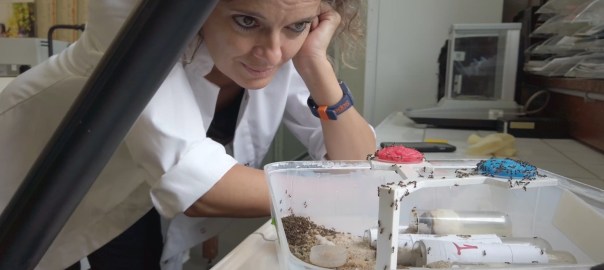
Dussutour radiates an infectious passion for slime molds. “It’s one of the most interesting systems to study because it’s a single cell, but you can actually see it with your naked eye,” she says. Now a researcher at France’s National Center for Scientific Research, Dussutour studies how ant colonies and patches of slime molds — neither of which have a central brain — can make decisions with distributed intelligence and emergent plasticity.

Read the full story and Q&A at Science Friday or Massive Science
Wacky tube men could keep dingoes away from livestock in Australia

SCIENCE MAGAZINE

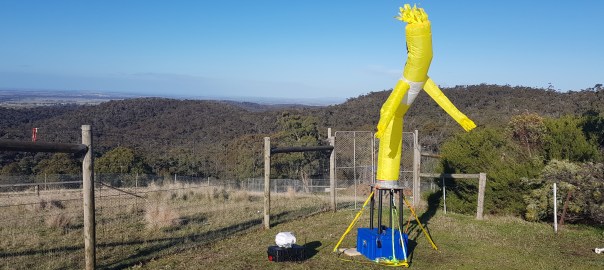
Inflatable tube men—those wacky, wriggling figures that tower near car dealerships and mattress stores—are typically designed to grab attention. But scientists in Australia have used them for the opposite purpose: to scare away unwanted onlookers. A new study suggests the unpredictable movements of these dancing eyesores could keep wild dingoes from killing livestock.

Read the full story in Science Magazine

Anuses can have teeth, farts can be weapons, butts can be homes: an interview with a farts expert

MASSIVE SCIENCE

Zoologist and butt book author Dani Rabaiotti on the worst fart she ever smelled and what new fart research she’d like to see

You’re probably here for the same reason I am: because farts are amazing. A single pffff, poot, or squeak, can plug nostrils, crack smiles, and break tensions. I want to talk about farts.

Dani Rabaiotti is a zoologist based in London who wrote a best-selling book on farts in 2017 called Does it Fart? She and her co-author, ecologist Nick Caruso, along with illustrator Ethan Kocak, followed a trail of animal communication science that is criminally undercovered. In this Q&A, she shares her most memorable farts (a seal’s, not her’s), why cat farts are so bad, the unsolved mysteries of butt-borne defense tactics, and so much more.

Read the full story and Q&A in Massive Science

Are Forever Chemicals Harming Ocean Life?

THE REVELATOR

Here’s what we know (and don’t know) about how dangerous PFAS chemicals travel ocean currents and harm wildlife — and what that could mean for humans.

In seabird after seabird, Anna Robuck found something concerning: per- and polyfluoroalkyl substances, or PFAS, lurking around vital organs.

“Brain, liver, kidney, lung, blood, heart,” Robuck says, rattling off a few hiding spots before pausing to recall the rest. Robuck, a Ph.D. candidate in chemical oceanography at the University of Rhode Island, quickly settles on a simpler response: She found the chemicals everywhere she looked.

PFAS — a group of synthetic chemicals — are often called “forever chemicals” due to their quasi-unbreakable molecular bonds and knack for accumulating in living organisms. That foreverness is less of a design flaw than a design feature: The stubborn, versatile molecules help weatherproof clothing; smother flames in firefighting foam; and withstand heat and grime on nonstick pans.

Through consumption and disposal, the chemicals seep into ecosystems and bodies, where they have been linked to cancers, pregnancy complications, and reproductive and immune dysfunction. Recent attention has focused on the prevalence of PFAS in drinking water.

“Over the past 10-15 years we’ve really developed this super negative picture of what PFAS do to humans,” Robuck says. “But we’ve barely scratched the surface of that in wildlife.”

Read the full story in The Revelator

Scientists Discover Exposed Bacteria Can Survive in Space for Years

SMITHSONIAN

An experiment conducted outside the International Space Station leads to a controversial theory about how life might travel between planets

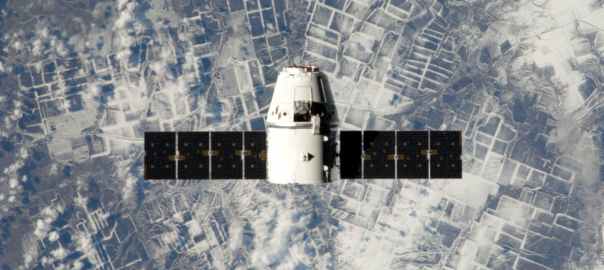
Framed by an infinite backdrop of dark, lifeless space, a robotic arm on the International Space Station in 2015 mounted a box of exposed microbes on a handrail 250 miles above Earth. The hearty bacteria had no protection from an onslaught of cosmic ultraviolet, gamma, and x-rays. Back on Earth, scientists wondered whether the germs might survive these conditions for up to three years, the length of the experiment, and if they did, what the results might tell the researchers about the ability of life to travel between planets.

Microbiologists have spent decades studying extremophiles, organisms that endure extreme conditions, to tug at the mysterious threads of how life blossomed on Earth. Some extremophiles can live unprotected in space for several days; others can endure for years, but only by carving out a home inside rocks. These findings underpin the theory that life as we know it can transfer between planets within meteorites or comets. Now, new findings published today in Frontiers in Microbiology, based on that experiment on the International Space Station, show that the bacteria Deinococcus radiodurans can survive at least three years in space. Akihiko Yamagishi, a microbiologist at Tokyo University of Pharmacy and Life Sciences who led the study, says the results also suggest that microbial life could travel between planets unprotected by rock.

Read the full story in Smithsonian

Cicadas Are Delightful Weirdos You Should Learn To Love

SMITHSONIAN

As Brood IX takes flight for the first time in 17 years, cicada lovers have their ears open.

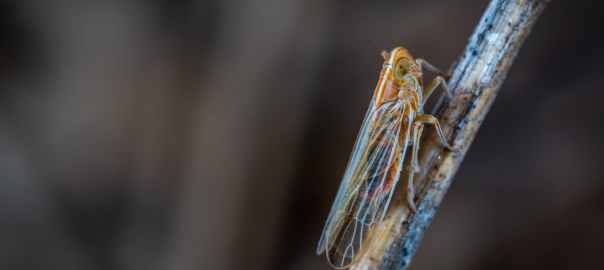
Around this time of year, Marianne Alleyne hosts dozens of houseguests in her basement. Far from using camping equipment or cots, they sleep upside-down, clinging to a curtain. The entomologist at the University of Illinois Urbana-Champaign has collected cicadas, those bizarre and misunderstood cyclical insects, for four years.

“In Illinois, we have 20 species, and hardly anything is known about them,” Alleyne says. “We know very little about what they’re doing underground.”

Cicadas have a longstanding reputation as loud, swarming pests that keep obnoxiously particular schedules. In the United States, they got a bad rap from the beginning, as early colonists misidentified these clouds of emerging cicadas as locusts. “They were thought of as a biblical plague,” says John Cooley, an assistant professor in residence at the University of Connecticut. That impression has been a lasting one: a group of cicadas is still referred to as a plague or a cloud. “The question I get the most is ‘How do I kill them?’” Cooley says.

Read the full story in Smithsonian

Decoding the chemistry behind cicada’s bacteria-killing wings

CHEMISTRY WORLD

Meticulously organised fatty acids are responsible for the bacteria-killing, superhydrophobic nanostructures on cicada wings. The team behind the discovery hopes that its work will inspire antimicrobial surfaces that mimic cicada wings for use in settings such as hospitals.

When in contact with dust, pollen and – importantly – water, the cicadas’ superhydrophobic wings repel matter to self-clean. These extraordinary properties are down to fatty acid nanopillars, periodically spaced and of nearly uniform height, that cover the wings.

Past work has generally only described cicadas’ wings as ‘waxy’ and not explained how these fatty acids nanopillars give rise to unique traits. Nor is it known exactly why cicada wings evolved antibacterial nanostructures. These gaps in our knowledge exist, in part, because of how diverse the cicada family is. But Marianne Alleyne’s group at the University of Illinois, Urbana–Champaign, along with colleagues at Sandia National Labs, set out to understand what role chemistry plays in the wings of two evolutionarily divergent species.

Read the full story in Chemistry World

Snow Strokers Provides Hope on the Slopes for Stroke Survivors

5280

After experiencing his seventh stroke, Rick Herrmann realized he could help survivors learn (or relearn) how to ski—potentially reducing the risk of future strokes.

After his first stroke, Rick Herrmann’s world changed. After his fourth, his doctor referred him to a psychologist to assist him in pondering death. But after his seventh stroke, Herrmann relearned to ski, and began inspiring other survivors to do the same.

Herrmann first skied through adversity long before having a stroke. In ski practice as a 17-year-old, he crashed disastrously and injured his foot. That didn’t do much to stop him. “I still had a season pass so I went up skiing, I just skied on one leg,” Herrmann says. “Little did I know that 20 years later, that’d be the way I’d be skiing.”

Read the full story in 5280

How Scientists Use Climate Models to Predict Mosquito-Borne Disease Outbreaks

SMITHSONIAN

The ebb and flow of rainy seasons corresponds with the hatching of millions of mosquitoes—and the spread of diseases they carry

Few natural phenomena pose a greater threat to humans than a swarm of mosquitoes erupting from a cluster of soil-lodged eggs. These bloodthirsty menaces can carry a host of diseases, such as Zika, West Nile and malaria, making mosquitoes the world’s deadliest animals.

Mosquito-borne diseases threaten billions of people, and while the diseases vary in biology and geography, most, if not all, are exacerbated by climate change. Scientists predict that a warming world will invite the spread of more mosquitoes, and more illness, threatening a billion more people over the next 60 years. But long-term predictions are hard to act on, and public health experts believe short-term forecasts could better kick-start programs to save people’s lives today.

For the last 20 years, scientists studying weather patterns have pieced together how real-time data can help predict mosquito-borne disease outbreaks weeks or even months before the insects emerge from the ground. These tools may provide a mechanism to prevent millions of deaths, tracking monsoons and other rain cycles to forecast mosquito hatching events.

Read the full story in Smithsonian

Mosquito control could slow the spread of disease in a warming world

THE VERGE

Diseases and disasters

The recently announced Green New Deal, a resolution to help address the threats of climate change, gives public health advocates a chance to confront an overlooked consequence of climate change: worsening mosquito-borne illnesses.

The resolution, which outlines projects designed to boost renewables, reduce emissions, and climate-proof the country’s infrastructure, was introduced by Rep. Alexandria Ocasio-Cortez (D-NY) and Sen. Ed Markey (D-MA). Its goal is to extinguish potential economic, national, and social infernos that are brought on by climate change. But the plan also recognizes growing threats to public health, such as the diseases becoming far more common in a warming world.

Climate change has already expanded the reach of mosquitoes that carry certain illnesses. More extreme weather events are also part of the package, and more severe storms, stronger hurricane seasons, more floods and droughts also increase the risk of disease after a natural disaster. According to the World Health Organization (WHO), climate change could increase the number of people who are at risk of malaria by over 100 million.

Read more in The Verge