Tag Archives: News

This Sticker Absorbs Sweat—and Might Diagnose Cystic Fibrosis

WIRED

The device may make it easier to quickly test newborns and could open the door to at-home monitoring.

IN THE MIDDLE Ages, a grim adage sometimes turned up in European folklore and children’s stories: Woe to that child which when kissed on the forehead tastes salty. He is bewitched and soon must die. A salty-headed newborn was a frightful sign of a mysterious illness. The witchcraft diagnosis didn’t hold, of course, but today researchers think that the salty taste warned of the genetic disease we now know as cystic fibrosis.

Read the full story in WIRED

Twinkling Black Holes Reveal an Invisible Cloud in Our Galaxy

WIRED

Cosmic radio backlights are helping scientists size up “missing” forms of matter and might offer clues about what makes up the universe.

AT FIRST, YUANMING Wang was not excited. More relieved, maybe. The first -year astrophysics PhD student at the University of Sydney sat in front of her computer, looking at images in which she’d found the signs of radio waves from distant galaxies twinkling, just as she had hoped. But because Wang’s discovery relied more on scouring ones and zeros than peering through a telescope—and the discovery itself was just plain weird—it took awhile for the moment to hit.

Read the full story in WIRED

How and Why to Watch NASA’s Perseverance Mars Rover Landing

WIRED

NASA’s biggest and boldest rover attempts a momentous landing on February 18

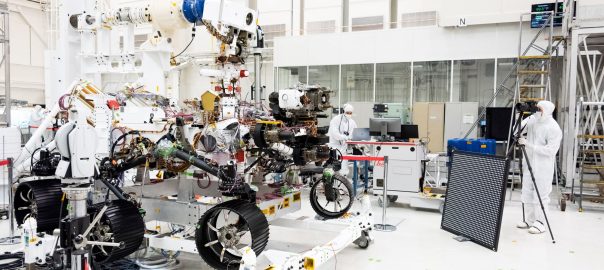
On Thursday afternoon, Perseverance, NASA’s most ambitious self-driving rover, will attempt the agency’s most challenging Mars landing. Perseverance is carrying a suite of science experiments that will search for signs of life, launch a drone helicopter, and record the planet’s audio for the first time. But conducting those experiments relies solely on whether “Percy” can stick the landing.

Read the full story in WIRED

Researchers Levitated a Small Tray Using Nothing but Light

WIRED

One day a “magic carpet” based on this light-induced flow technology could carry climate sensors high in the atmosphere—wind permitting.

IN THE BASEMENT of a University of Pennsylvania engineering building, Mohsen Azadi and his labmates huddled around a set of blinding LEDs set beneath an acrylic vacuum chamber. They stared at the lights, their cameras, and what they hoped would soon be some action from the two tiny plastic plates sitting inside the enclosure. “We didn’t know what we were expecting to see,” says Azadi, a mechanical engineering PhD candidate. “But we hoped to see something.”

Let’s put it this way: They wanted to see if those plates would levitate, lofted solely by the power of light.

Read the full story in WIRED

Forget Blood—Your Skin Might Know If You’re Sick

WIRED

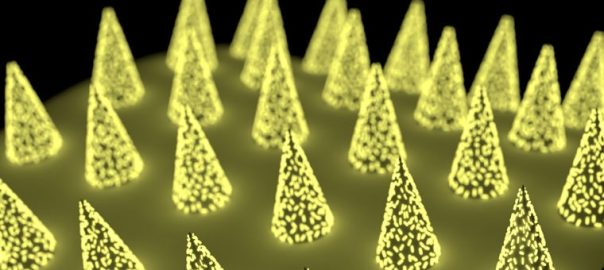
This glowing microneedle test could catalyze a transition from blood-based diagnostics to a stick-on patch.

A RIVER OF biological information flows just beneath the outermost layers of your skin, in which a hodgepodge of proteins squeeze past each other through the interstitial fluid surrounding your cells. This “interstitium” is an expansive and structured space, making it, to some, a newfound “organ.” But its wealth of biomarkers for conditions like tuberculosis, heart attacks, and cancer has attracted growing attention from researchers looking to upend reliance on diagnostic tools they say are inefficient, invasive, and blood-centric.

Read the full story in WIRED

Wacky tube men could keep dingoes away from livestock in Australia

SCIENCE MAGAZINE

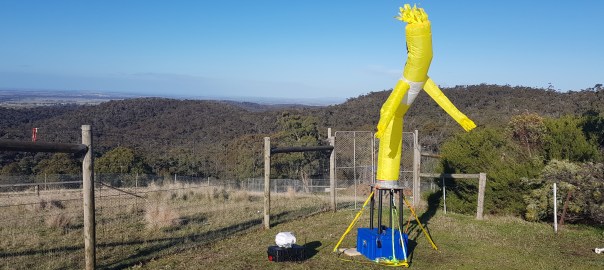
Inflatable tube men—those wacky, wriggling figures that tower near car dealerships and mattress stores—are typically designed to grab attention. But scientists in Australia have used them for the opposite purpose: to scare away unwanted onlookers. A new study suggests the unpredictable movements of these dancing eyesores could keep wild dingoes from killing livestock.

Read the full story in Science Magazine

Decoding the chemistry behind cicada’s bacteria-killing wings

CHEMISTRY WORLD

Meticulously organised fatty acids are responsible for the bacteria-killing, superhydrophobic nanostructures on cicada wings. The team behind the discovery hopes that its work will inspire antimicrobial surfaces that mimic cicada wings for use in settings such as hospitals.

When in contact with dust, pollen and – importantly – water, the cicadas’ superhydrophobic wings repel matter to self-clean. These extraordinary properties are down to fatty acid nanopillars, periodically spaced and of nearly uniform height, that cover the wings.

Past work has generally only described cicadas’ wings as ‘waxy’ and not explained how these fatty acids nanopillars give rise to unique traits. Nor is it known exactly why cicada wings evolved antibacterial nanostructures. These gaps in our knowledge exist, in part, because of how diverse the cicada family is. But Marianne Alleyne’s group at the University of Illinois, Urbana–Champaign, along with colleagues at Sandia National Labs, set out to understand what role chemistry plays in the wings of two evolutionarily divergent species.

Read the full story in Chemistry World

Futuristic organ-on-a-chip technology now seems more realistic than ever

Massive Science

Researchers have pioneered what may be the most accurate simulation of kidney function to-date

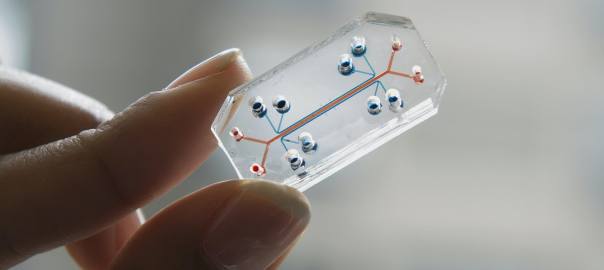
The future of medical research may fit on a clear chip not much bigger than a quarter.

In theory, organ-on-a-chip devices are aptly named. The engineered silicone modules contain small “organs,” represented by specific types of human cells. Fluid courses through thin channels — like veins, but only a fraction of the size — which interconnect the various cells, and expose them to drug treatments carefully administered by lab scientists. They may look like gadgets from the future, but these organ-on-a-chip devices have already garnered attention from scientists hoping to fix a broken drug discovery process.

Read more in Massive Science