Tag Archives: Health

Can We Destroy ‘Forever Chemicals’?

INVERSE

Emerging tech could wipe out tiny toxic substances from drinking water.

To ensure that drinking water is safe for consumption, the U.S. Environmental Protection Agency is proposing the first-ever federal restrictions on six “forever chemicals” known to harm human health. The agency will hold a public comment session on May 4 and expects to finalize the regulation by the end of this year.

Previously, the EPA recommended limiting the levels of two varieties of PFAS — perfluorooctanoic acid (PFOA) and perfluorooctanesulfonic acid (PFOS) — to 70 parts per trillion in drinking water. Now, the agency wants to mandate stricter levels: 4 ppt for PFOA and 4 ppt for PFOS. Four other kinds of PFAS will also be regulated on a proposed “hazard index” to determine their cumulative risk.

“EPA anticipates that if fully implemented, the rule will prevent thousands of deaths and reduce tens of thousands of serious PFAS-attributable illnesses,” the agency wrote in a statement.

Scientists and environmental groups are praising the proposal, which they say is long overdue. But setting limits is just half the battle: Scientists are now hunting for ways to filter and destroy the chemicals before they can make it into our water.

Read the full story in Inverse

This Lab-Grown Skin Could Revolutionize Transplants

WIRED

A new kind of “edgeless” engineered tissue can fit any irregular shape, paving the way for hand and face grafts that look and move better.

ALBERTO PAPPALARDO WAS nervous the morning before the transplant. He’d spent the previous month nurturing a cluster of skin cells until they reached their final form: a pinkish-white tissue in the shape of a mouse’s hindlimb that could be slipped onto the animal like a pant leg. If all went according to plan, the mouse’s surrounding skin would accept the lab-grown stuff as its own.

In the end, it took less than 30 seconds to position the new skin, and under 10 minutes to complete the whole procedure. “It was a perfect fit,” recalls Pappalardo, a medical doctor and postdoc focusing on dermatology and tissue engineering at Columbia University Medical Center. That’s a big deal, because it could help solve a persistent challenge in treating burns and other large wounds: how to cover irregular shapes with real, functional skin.

Read the full story in WIRED

This Fake Skin Fools Mosquitoes With Real Blood

WIRED

Research on new repellents and the viruses these insects carry relies on lab animals and human volunteers. What if there was a better option?

THE WORLD’S DEADLIEST animal is a picky eater. Because they transmit viral diseases like Zika and chikungunya, and the parasites that cause malaria, mosquitoes like blood-sucking Aedes aegypti are responsible for over 700,000 deaths worldwide every year.

But in Omid Veiseh’s lab at Rice University, his team of bioengineers was struggling to get mosquitoes to eat. Typically, researchers study mosquitoe feeding by letting them bite live animals—lab mice, or grad students and postdocs who offer up their arms for science. That’s not ideal, because lab animals can be expensive and impractical to work with, and their use can raise ethical issues. Student arms don’t scale well for large tests.

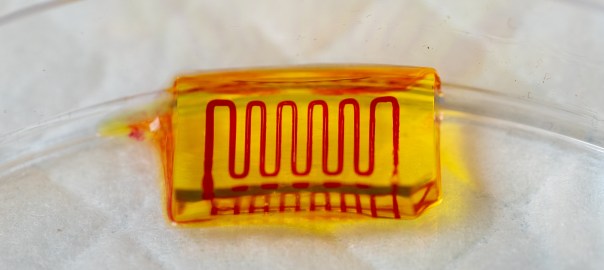
In collaboration with entomologists from Tulane University, the Rice team wanted to develop a way of studying mosquito behavior without the challenges of experimenting on large numbers of animals. Their solution was something totally different: real blood encased in a lifeless hydrogel. “It feels like jello,” Veiseh says. “The mosquitoes have to bite through the jello to get to the blood.” 

Read the full story in WIRED

The Case of the Incredibly Long-Lived Mouse Cells

WIRED

In a bizarre experiment, scientists kept the rodents’ immune T cells active four times longer than mice can live—with huge implications for cancer, vaccination, and aging research.

DAVID MASOPUST HAS long imagined how to push immune systems to their limits—how to rally the most powerful army of protective cells. But one of the big mysteries of immunology is that so far, nobody knows what those limits are. So he hatched a project: to keep mouse immune cells battle-ready as long as possible. “The idea was, let’s keep doing this until the wheels fall off the bus,” says Masopust, a professor of immunology at the University of Minnesota.

But the wheels never fell off. He was able to keep those mouse cells alive longer than anyone thought possible—indeed, much longer than the mice themselves.

Read the full story in WIRED

How the UN’s ‘Sex Agency’ Uses Tech to Save Mothers’ Lives

WIRED

Big Data, drones, diagnostics—the United Nations and other groups hope to innovate the world out of a maternal and reproductive health crisis.

TOWARD THE END of 2020, on a work trip to Chocó, Colombia, Jaime Aguirre came across a girl—perhaps 11 or 12 years old—holding a newborn.

“Is this your baby?” Aguirre asked. Yes, she said. He was shocked. “Can I ask you—sorry—why did you get pregnant so young?”

“My boyfriend at the time told me that the first time that you have sex, you don’t get pregnant,” he says she replied.

Aguirre is the innovation coordinator for the United Nations Population Fund (UNFPA) in Colombia, a human rights agency focused on reproductive health. It’s the UN’s “sex agency,” and Aguirre describes his job as bolstering health in his country by supporting new technologies. Making them accessible to young people is especially important, because pregnancy is the number one killer of girls aged 15 to 19 worldwide, according to data from Save The Children and UNFPA.

Read the full story in WIRED

How the physics of farts could help prevent an outbreak

INVERSE

Meet the S.H.A.R.T. machine, a device helping AI analyze toilet activities.

AS DAVID ANCALLE opened video after video of diarrhea this year, it struck him: This is not what he expected to be doing for his Ph.D.

Ancalle, a mechanical engineering student at Georgia Tech who researches fluid dynamics, is currently working to demystify the acoustics of urination, flatulence, and diarrhea. His team is training AI to recognize and analyze the sound of each bathroom phenomenon; in fact, research suggests that tracking the flow of our excretions could benefit public health.

Read the full story in Inverse

A Real-Life Body Clock

GROW

A blood test says you’re aging too fast. Now what?

HOLLY MANN remembers a time — it must have been twelve years ago — when she started feeling old. Then 27, the US Army veteran found that she could no longer comfortably exercise. She was sapped of energy, and carried pain in her shoulders, hip, knees, and wrists. “I had a lot of issues that I would frankly associate with somebody who was two decades older than me,” she says. The doctors said that her symptoms stemmed from months of undetected carbon monoxide poisoning. They couldn’t tell her any more than that. Ms. Mann was desperate to feel better — really, she says, to feel younger.

Consulting the internet, she started tinkering with her diet. She tried new workouts. She ordered capsules of Vitamin This and Supplement That. And a few years in, after incremental ups and downs, she started to see real improvements. Though she still faced her share of low-energy days, by 2020, Mann felt noticeably better. She was curious: how much better? Had she, possibly, turned back the hands of time?

Read the full story in GROW

At Some Colleges, the Fall of Roe Will Weaken Student Health Care

WIRED

As students return to school, many will find restricted campus access to abortion services and information—and perhaps reproductive care in general.

ON JUNE 24, an independent women’s health center in Tuscaloosa, Alabama, received cease-and-desist orders from the state’s attorney general for its abortion services. The order came immediately after the US Supreme Court’s Dobbs decision, overturning Roe v. Wade. The clinic’s operations manager told local news that her team spent that day canceling more than 100 appointments. The clinic sits right across the road from the University of Alabama and was one of only three providers in the state.

As a new school year begins on college campuses across the country, many students will move to states that promise them fewer rights now than when they applied to school last winter, or when they accepted enrollment offers this spring. On some of those campuses, health centers—fearing legal consequences for their staffers—will likely roll back what they can offer students, both in terms of care and information about how to access abortion services or pills elsewhere. Some health advocates worry that the chilling effect may even spread to conveying general information about birth control and sexual health.

“It’s going to have devastating effects,” says Gillian Sealy, chief of staff with the nonprofit Power to Decide, which advocates for reproductive rights. “In many instances, this is the place that a young person might go to get their health needs met.” Unplanned pregnancies diminish the likelihood that a student will continue their education. So having the power to choose is paramount, she says.

Read the full story in WIRED

Can Disgusting Images Motivate Good Public Health Behavior?

WIRED

Graphic images have long been tools of campaigns against smoking and STDs. Researchers want to know if they can work for infectious diseases like Covid.

EVERY NOW AND then, I remember the Slideshow. This presentation about sexually transmitted infections was infamous among my fellow South Florida seventh graders. If you got your middle school sex ed elsewhere, it might be hard to imagine just how graphic its slides were. But being gross was the point: If kids saw the symptoms of untreated gonorrhea, the reasoning went, then disgust would sway them from reckless decisions.

Down in the basic wiring of our brains, disgust motivates avoidance. You’re less likely to go on a second date with a first date who smells bad. If a pigeon picks at your sandwich, you might opt to go hungry. Public health data backs this up: When cigarette packaging shows graphic pictures of smokers’ diseased organs, attempts to quit smoking double. “A vivid image is much more powerful than just abstract numbers,” says Woo-kyoung Ahn, a professor of psychology at Yale University. “Disgust is a powerful emotion rooted as an evolutionary adaptation that helps us expel and avoid harmful substances.”

Read the full story in WIRED