Tag Archives: Environment

The quest to find out how our bodies react to extreme temperatures

MIT Technology Review

Scientists hope to prevent deaths from climate change, but heat and cold are more complicated than we thought.

It’s the 25th of June and I’m shivering in my lab-issued underwear in Fort Worth, Texas. Libby Cowgill, an anthropologist in a furry parka, has wheeled me and my cot into a metal-walled room set to 40 °F. A loud fan pummels me from above and siphons the dregs of my body heat through the cot’s mesh from below. A large respirator fits snug over my nose and mouth. The device tracks carbon dioxide in my exhales—a proxy for how my metabolism speeds up or slows down throughout the experiment. Eventually Cowgill will remove my respirator to slip a wire-thin metal temperature probe several pointy inches into my nose.

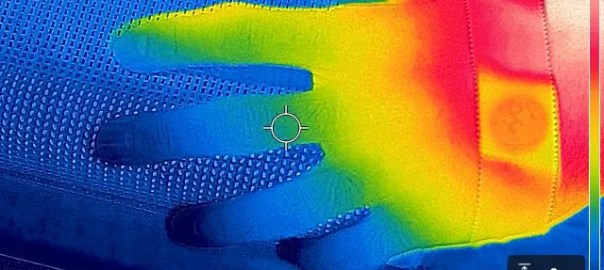
Cowgill and a graduate student quietly observe me from the corner of their so-called “climate chamber.” Just a few hours earlier I’d sat beside them to observe as another volunteer, a 24-year-old personal trainer, endured the cold. Every few minutes, they measured his skin temperature with a thermal camera, his core temperature with a wireless pill, and his blood pressure and other metrics that hinted at how his body handles extreme cold. He lasted almost an hour without shivering; when my turn comes, I shiver aggressively on the cot for nearly an hour straight.

I’m visiting Texas to learn about this experiment on how different bodies respond to extreme climates. “What’s the record for fastest to shiver so far?” I jokingly ask Cowgill as she tapes biosensing devices to my chest and legs. After I exit the cold, she surprises me: “You, believe it or not, were not the worst person we’ve ever seen.”

Read the story in the BODY issue of MIT Tech Review (Dec. 2025)

The covert project to (finally) measure hellish subway heat

SEQUENCER MAG

Meet Jack Klein, the guy who stealthily collects data about New York’s hottest days underground.

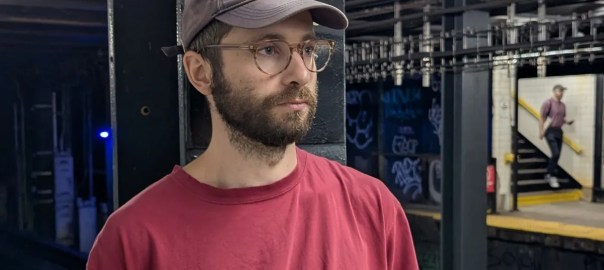
At 181st street in New York’s Washington Heights neighborhood, an August heat wave broils the asphalt, concrete, and any inch of skin exposed to the sun. Shade offers some relief, with one major exception: the underground. Washington Heights resides several hundred feet above lower Manhattan, so its subway stops are buried deeper underground. “People tell me, you’ve gotta go to the elevator inside 181stit’s an inferno,” said Jack Klein, founder of NewYorkLab, a guerilla project to study environmental conditions at subway stations.

Read the full story at Sequencer Magazine

A scientific case for an Earth alive

Sequencer

“Becoming Earth” author Ferris Jabr on his new book and how life emerged as an extension of the planet’s surface.

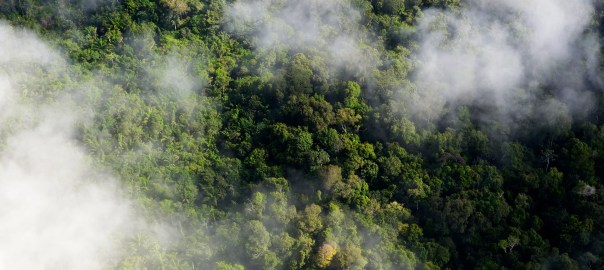
Ferris Jabr’s sense of the world changed when he learned about rain in the Amazon. It’s no surprise that rain and the world’s most voluminous river feeds the world’s largest tropical rainforest. But Jabr, a science journalist, was struck by how this sorta … missed the point.

It’s backwards. Rather than a jungle springing up in a wet climate, the Amazon generates the rain itself. This is so-called “evapotranspiration” where trees and plants silently pump excess water into the atmosphere — up to 20 billion tons per day. But Jabr’s real surprise came in learning that even evapotranspiration wasn’t the whole story. All the Amazon’s lifeforms were involved.

“The pollen, the fungi, the microbes, all these tiny particles, and gasses and volatile compounds,” contribute to the conditions for rain, Jabr said. “That sparked this curiosity in me: how else is life dramatically changing its environment?”

Read the full story in Sequencer, and subscribe to support our work

The biggest threat to biodiversity you’ve never heard of

Sequencer

As a fungus pushes dozens of amphibians into extinction, researchers search for whatever hope they can grab.

Erin Lundy hasn’t always loved frogs. The Hawaiʻi-born biologist and animal care expert had more of a soft spot for marine mammals and in 2018 began working with otters and seals at the Aquarium of the Pacific in Long Beach, California. “They’re very cute, charismatic, and smart,” Lundy told me. Frogs may be cute, she added, but they’re not known for their smarts. 

A couple years into her work in Long Beach, the aquarium needed help with amphibian conservation. A coworker asked if Lundy liked frogs. She replied: “Yeah, enough.”

Against all odds, she came around on amphibians. At first glance, a palm-sized tattoo of an otter inside Lundy’s forearm backs up her professed love of mammals. But there’s a surprise in the tattooed otter’s grasp: a tiny, colorful mountain yellow-legged frog. “It turns out I really like frogs,” she said. 

Lundy became captivated by how in tune frogs are with their habitat. Amphibians have porous, permeable skin that sensitizes them to all the chemicals and conditions of their environment. “They like stability — they don’t like super hot, super cold,” Lundy said. “They’re incredible indicator species of what the health of our environment actually looks like.” 

Read the full story in Sequencer Magazine

Is climate resilience possible in a world of borders?

SEQUENCER

We govern deforestation, agriculture, and biodiversity within our own borders. But unchecked sovereignty may be a mistake.

In January 2008, global rice prices shot to record highs. Shipping costs, a multi-year Australian drought, and erratic weather in Asia choked yields. In producer countries, the fear of dwindling stockpiles prompted the governments of India, Vietnam, Brazil, Egypt, and elsewhere to halt exports, safeguarding their own supplies but propelling prices up to four times higher than normal.

This meant trouble for countries reliant on foreign rice. Senegal, for example, has depended on grain imports since the 1800s when its French colonizers steered Senegal’s agriculture toward cash crops like peanuts, and instead imported rice from France’s Asian colonies. In 2008, the impact of these past decisions was civil instability: people protested against political leaders as many could not afford rice.

For most outside observers, this was bad enough, yet when the scarcity ended we quickly forgot about the crisis. But to Ariadna Anisimov, a postdoctoral researcher at the Institute of Development Policy at the University of Antwerp, this example is a quintessential case of “transboundary climate risk” that the world is ill equipped to handle in the future. For her, the link between climate change and societal instability couldn’t be clearer.

What makes the cautionary rice tale prototypical is its demonstration of not just the tangled web of climate and livelihoods around the world, but also the global consequences of domestic policies. Export bans shielded the producer at the expense of the market. For an importing country like Senegal to become self-sufficient in rice, they’d need major agricultural changes. But climate change was already affecting farmer’s yields through more variable rain and more salt in groundwater; and irrigating with river water remained both a touchy subject with neighboring countries and flooding risk.

“Rivers have been shifted, and turned, and irrigated to make barrages and hydropower,” Anisimov told me. “There’s always competing interests between the upstream and the downstream communities, and they have a lot of cascading effects, especially because rivers cross borders.”

Climate change’s drivers and hazards don’t obey borders, yet the laws and regulations meant to control them are confined within national boundaries. So how do we reckon with the fact that necessary climate action may be incompatible with how our entire world is organized?

Read the full story and support our work in Sequencer Magazine

How Did We Draw The Planet Before We Actually Saw It?

SEQUENCER

The story of our not-so-Blue Marble

NOTE: This is the first story of mine for Sequencer, a writer-owned science magazine and newsletter that I’ve launched with three fellow science journalists that I admire. It would mean the world to me if you’d take a moment to subscribe here: https://www.sequencermag.com/

I spend a large portion of my work day feeling confused. I start my days bewildered by advances in niches of science that I only recently learned existed. Chatting with experts usually resolves my initial confusion, but immediately after spawns more: Every question begets an answer and more questions, ad infinitum.

To me, there’s no more jolting brand of bewilderment than doing a double take on the everyday things. New discoveries may lurk in the mundane. The ubiquitous, almost cartoonish image we have in our heads of the Earth might seem like a trivial matter now, but seriously, how did we get there?

So let’s first lay out what I mean by Earth’s appearance. How did we know how to draw Earth until we sent cameras and people into space to snap some pictures? Sure, we know that land is greenish, oceans are blueish, and that mapmakers have spent millenia tracing the contours of continents, but these details tell us about Earth’s appearance in theory more than in reality. Think of it this way: I know the color of my hair and skin, as well as the shape of my head and mouth, yet I still study the bathroom mirror in the morning to see who or what I’m working with that day. What about the appearance of that Earth—the “woke up like this” Earth?

Turns out this wasn’t a trivial problem; and in some ways, we kinda didn’t know what Earth actually looked like until we saw it from space.

Read the full story on Sequencer

Snow Sports Are Getting More Dangerous

WIRED

Extreme conditions caused by climate change are making winter sports more risky. From Colorado to Washington, that’s also making mountain rescue missions even more perilous.

Many people meet Dale Atkins for the first time on their worst days—ice climbers who are stranded and injured, skiers that have been swallowed by an avalanche. Atkins, a skilled mountaineer as well as a climatologist and former weather and avalanche forecaster, is one of the experts on Colorado’s Alpine Rescue Team that local sheriffs call to the rescue.

Read the full story in WIRED

A Revelation About Trees Is Messing With Climate Calculations

WIRED

Trees make clouds by releasing small quantities of vapors called “sesquiterpenes.” Scientists are learning more—and it’s making climate models hazy.

EVERY YEAR BETWEEN September and December, Lubna Dada makes clouds. Dada, an atmospheric scientist, convenes with dozens of her colleagues to run experiments in a 7,000-gallon stainless steel chamber at CERN in Switzerland. “It’s like science camp,” says Dada, who studies how natural emissions react with ozone to create aerosols that affect the climate.

Clouds are the largest source of uncertainty in climate predictions. Depending on location, cloud cover can reflect sunlight away from land and ocean that would otherwise absorb its heat—a rare perk in the warming world. But clouds can also trap heat over Arctic and Antarctic ice. Scientists want to know more about what causes clouds to form, and if that effect is cooling or heating. And most of all, says Dada, “We want to know how we humans have changed clouds.”

Read the full story in WIRED