Tag Archives: DDN

A more electric language for biology

DDN

Bioelectricity is a potent lever for controlling health. What would it look like to treat the body electrically, rather than chemically?

When Kevin Tracey met 11-month-old Janice at New York Hospital, she was recovering from multiple bouts of sepsis after her grandmother accidentally spilled a pot of scalding water on her. Janice suffered severe burns to more than 90 percent of her body and, subsequently, septic shock — a life-threatening immune response to infection. Tracey, back in 1987, was a neurosurgery resident working the burn unit at what’s now the Weill Cornell Medical Center.

After three and a half weeks, Janice was ready to be discharged from the hospital. The day prior to being sent home, Tracey watched from a doorway as a nurse gave Janice a bottle, swaying with her gently in a rocking chair. Then, Janice’s eyes rolled back, and she died. Tracey attempted CPR for an hour — all efforts failed.

“As overwhelmingly sad as this was, it was even worse because I couldn’t answer her family’s questions about what happened,” Tracey recalled in a 2015 DARPA symposium keynote address.

Read the full story in the December issue of Drug Discovery News
New CRISPR Phase 1 trial hints at a first-of-its-kind heart treatment on horizon

Drug Discovery News

A gene therapy targeting ANTIGPTL3 reduced cholesterol and triglyceride levels simultaneously.

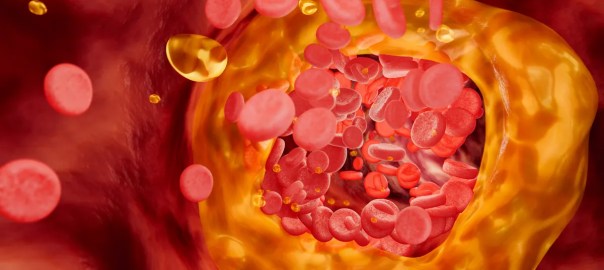
Elevated low-density lipoprotein (LDL) cholesterol and high triglycerides each affect about one in four adults worldwide. But a new CRISPR-Cas9 therapy may reduce the risk of major heart events caused by cholesterol and triglycerides.

LDL and triglycerides are risk factors for plaque buildup in heart disease. On Saturday morning, a team of researchers from Cleveland Clinic, CRISPR Therapeutics, Victorian Heart Institute, New Zealand Clinical Research, and Royal Adelaide Hospital published results in the New England Journal of Medicine from a 15-person Phase 1 trial of CTX310, which cut levels of both by about half.

Read the full story in Drug Discovery News

New therapies could regenerate the heart after heart failure

Drug Discovery News

New progress presented at an annual conference of the American Heart Association signals renewed hope to repair the heart after injury.

When heart failure doesn’t kill immediately, it kills slowly. The heart is said to “remodel” after injury but often can’t come back stronger. Injured sections lose their vital nerves, or gain back too many. Fibroblast cells thicken the pump’s walls with collagen. The adult heart scars, and this weakens its output.

The problem is that adult hearts aren’t programmed to bounce back to their prior abilities. Yet “everything you need to regenerate a heart should exist in the mammalian genome,” said Ahmed Mahmoud, who studies regenerative biology at the Sanford Burnham Prebys Medical Discovery Institute. “We know that early in life, the mammalian heart could actually do it by itself.” In 2011, Mahmoud and colleagues reported that mammals’ hearts can regenerate at very young ages: One-day-old mice recovered from having small slivers of their hearts cut out; seven-day-old mice didn’t.

Read the full story in Drug Discovery News

Gene-edited stem cells aim to reverse rheumatoid arthritis

Drug Discovery News

A new approach for gene editing will get its shot in a common and chronic autoimmune disorder.

At the root of anything good or bad in the human immune system is a question about recognition. When the immune system functions correctly, it clocks unrecognized bacteria and viruses. When it misbehaves, immune cells misidentify the body’s tissue as its own. Such autoimmune disorders attack the pancreas in type 1 diabetes, nerve fibers in multiple sclerosis, and joints in rheumatoid arthritis (RA). Recognition also stifles the drugs designed to treat immune symptoms: Our bodies can develop drug-specific antibodies that target them.

Read the full story in Drug Discovery News

Umbilical cord blood: a lifeline for pediatric diseases

DRUG DISCOVERY NEWS

Doctors are recording a wave of wins using cord blood to heal sick children. The clinical evidence suggests that more wins may come.

Caridad Martinez has a bone to pick with bone marrow. In 2008, during her pediatric bone marrow transplant fellowship, Martinez met newborns with severe immunodeficiencies. Those patients’ bone marrow manufactured dysfunctional blood and immune cells. The kids were dying. The standard remedy was to fetch marrow from a donor to hopefully replace the faulty cells with healthier ones.

However, finding a bone marrow match can be hard, especially for racial and ethnic minorities. “You don’t have the same representation of donors,” said Martinez, who is now a bone marrow transplantation researcher at Baylor College of Medicine and a physician at Texas Children’s Hospital. White patients have a 79 percent chance of finding an unrelated donor; Black and African American patients have just a 29 percent chance (1). At the time of Martinez’s fellowship, marrow transplants were a stalwart in the field, but she noticed an urgent need to challenge the status quo. She found that opportunity with a then-budding type of transplant that she felt might be more accessible: transplanting blood from umbilical cords.

Read the full story in the February Issue of Drug Discovery News

Rewiring cell communication to treat melanoma

Drug Discovery News

Exosomes show encouraging results for treating melanoma, offering potential benefits for targeted drug delivery and immunotherapy

When Susanne Gabrielsson first learned about exosomes, her eyes widened. In 1999, she’d just started a postdoctoral fellowship at the Curie Institute in Paris. Gabrielsson, an immunologist now at Sweden’s Karolinska Institute, thumbed through paper after paper describing which types of cells release these tiny blobs of information.

“I realized that since they were released from many cells, they probably would be released from all cells,” she said. “And that they would be a new means of communication.”

Read the full story in DDN September Issue

Immunologists hack body rhythms for medicine

Drug Discovery News

The success of vaccines and cancer treatments varies depending on the time of day they are delivered. Researchers now look to exploit circadian rhythms to improve health outcomes.

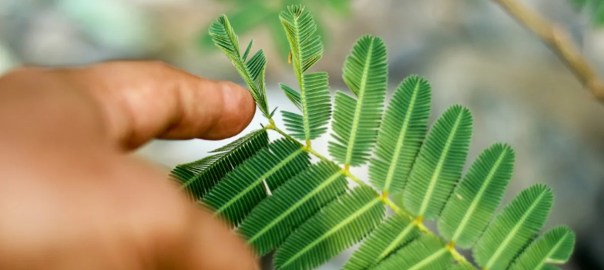
On a warm Parisian evening around 1729, the Seine river snailed past the Institut de France, inside which polymath Jean-Jacques Dortous de Mairan fixated on the slow movements of a plant (1). The fern-like leaves of his Mimosa pudica spread wide toward the sun during the day. Yet at night, the leaves furled back inward as if to sleep.

Dortous de Mairan intervened. He stowed the plant in the dark, wondering whether the cycle would hold. It did (2). Even without absorbing sunlight, the mimosa carried out its daily rhythm. 200 years passed before biologists appreciated the discovery as an internal clock and coined the term “circadian rhythm.”


“For a few centuries, people interested in circadian rhythms were mainly botanists,” said Nicolas Cermakian, a chronobiologist at McGill University.

Today, scientists understand the importance of daily rhythms. The human circadian system regulates sleep and the function of every tissue in the body. All organs and cells throughout the body have their own internal clocks, which cycle between different functions such as assembling particular proteins and receiving molecular messages. Disruptions like sleep deprivation, shift work, and even jet lag can deteriorate health by increasing the risk of metabolic disorders, cardiovascular disease, and cancer, and scientists’ understanding of human rhythms is rapidly evolving (3).

Read the full story in Drug Discovery News