Category Archives: News

Timnit Gebru Says Artificial Intelligence Needs to Slow Down

WIRED

The AI researcher, who left Google last year, says the incentives around AI research are all wrong.

ARTIFICIAL INTELLIGENCE RESEARCHERS are facing a problem of accountability: How do you try to ensure decisions are responsible when the decision maker is not a responsible person, but rather an algorithm? Right now, only a handful of people and organizations have the power—and resources—to automate decision-making.

Organizations rely on AI to approve a loan or shape a defendant’s sentence. But the foundations upon which these intelligent systems are built are susceptible to bias. Bias from the data, from the programmer, and from a powerful company’s bottom line can snowball into unintended consequences. This is the reality AI researcher Timnit Gebru cautioned against at a RE:WIRED talk on Tuesday.

“There were companies purporting [to assess] someone’s likelihood of determining a crime again,” Gebru said. “That was terrifying for me.”
Read the full story in WIRED.

Climate-Driven Extinction Made Mammals’ Teeth Less Weird

WIRED

Fossils show how species diversity—and dental diversity—suddenly collapsed 30 million years ago, suggesting a link between climate, diet, and survival.

DORIEN DE VRIES always asks for permission before flying across the world to touch someone else’s teeth. Some of the owners are anxious. Their teeth are fragile—irreplaceable. But de Vries, a paleontologist, sets their minds at ease. She knows how to be extra careful. “It’s exactly the same as dentists’,” she says of the gooey paste she uses to capture the tooth topography. “It sets really quickly and you can peel it off.” She casts the molds and then 3D-scans the replica teeth into digital immortality.

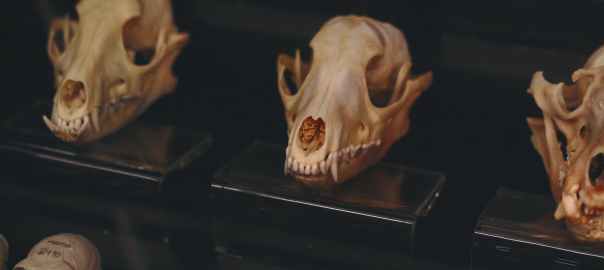
Well, maybe not exactly like a dentist. The teeth De Vries is working with are up to 56 million years old—they once belonged to the mammals of the late Eocene, Oligocene, and Miocene Epochs and are now preserved in museum and university collections.

Read the full story in WIRED.

This Protein Predicts a Brain’s Future after Traumatic Injury

WIRED

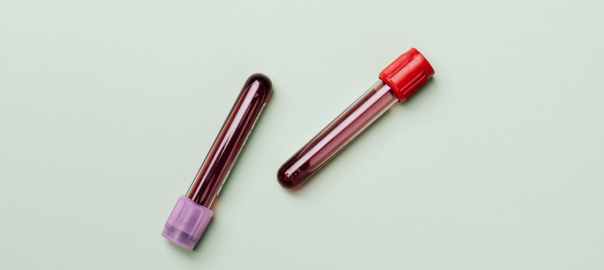
A blood test of “NfL” proteins answers questions about damage severity that doctors—and families—desperately need.

NEIL GRAHAM SEES a lot of head injuries: “Car accidents, violence, assault, gunshots, stabbing—the works, really,” says Graham, a neurologist from Imperial College London who practices at St. Mary’s Hospital nearby.

Doctors stop the bleeding, they relieve any pressure building inside the skull, maybe they’ll put the patient into a coma to keep the brain from overworking when it needs to relax and heal. Imaging can also help—to an extent. CT scans or MRIs pinpoint bruising or specks of hemorrhage in gray matter, the brain’s outer layer where neurons do most of their processing. But a clean scan isn’t a clean bill of health. Trauma to axons—a neuron’s root-like fibers that extend toward other neurons—often appears only in the deeper white matter, sometimes eluding simple scans.

Read the full story in WIRED.

The Artificial Leaf: Copying Nature to Fight Climate Change

ACS ChemMatters Magazine

An ancient chemical process enabled Earth to become a lush place teeming with life. Now researchers are replicating this process in an attempt to slow global warming.

Every plant, animal, and person owes their life to one sequence of chemical reactions: photosynthesis. The process, which converts water and carbon dioxide into food using sunlight, first evolved in cyanobacteria more than 2 billion years ago.

That’s right. Plants weren’t the first organisms to develop photosynthesis, though they are better known for it. Cyanobacteria are the ones that originally filled the atmosphere with photosynthesis’s gaseous by-product, oxygen (O2), which set the stage for more diverse life on Earth.

As beneficiaries of photosynthesis, humans depend on plants in a sort of carbon seesaw. Plants take in CO2 and release O2. They store that carbon as sugar. Hanging vines, grass, and trees all grow by pulling carbon atoms out of the air. We do the reverse, taking in O2 and releasing CO2. Finally, everything we eat completes the handoff: Human eats plant (or the animal who already did), human exhales, plant stores carbon, and the cycle continues.

This seesaw is part of the much broader carbon cycle that has affected the radiation balance of our planet. Cutting down huge swaths of forests and the burning of carbon-based fossil fuels causes the levels of CO2, a major greenhouse gas, to rise. And plants on Earth along with other natural parts of the carbon cycle can’t restore the balance on their own.

But what if we could copy what plants do to grab some of that excess CO2 to make fuels sustainably, instead of relying so heavily on fossilized carbon?

Read the full story in the October 2021 issue of ChemMatters

The Long-Lost Tale of an 18th-Century Tsunami, as Told by Trees

WIRED

Local evidence of the cataclysm has literally washed away over the years. But Oregon’s Douglas firs may have recorded clues deep in their tree rings.

ONE NIGHT IN late January 1700, two tectonic plates running along the Pacific Northwest coast released the tension they had accumulated during a centuries-long tête-à-tête. In a tectonic roar, the Juan de Fuca plate slipped past the North American plate, and a roughly 9.0-magnitude earthquake rattled the entire region. The coastline dropped and tsunamis washed over the entire Northwest coast.

Read the full story in WIRED

Dolphins Eavesdrop on Each Other to Avoid Awkward Run-Ins

WIRED

The new finding underscores the complexity of marine mammals’ social life and cognition. It may also help save the snoopy cetaceans.

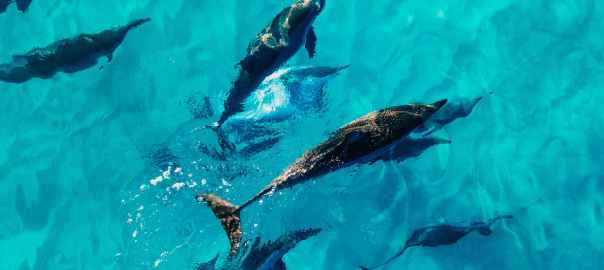
YOU’D THINK IT would be easier to spy on a Risso’s dolphin. The species frequents nearly every coast in the world. Their bulging heads and streaky gray and white patterning make them some of the most recognizable creatures in the ocean. And as with other cetaceans, they travel in groups and constantly chitchat: Clicks, buzzes, and whistles help them make sense of their underwater existence. Their social world is a sonic one.

“They’re a very vocal species,” says Charlotte Curé, a bioacoustics expert. “Sound is very important for them.”

Read the full story in WIRED

You’re Not Alone: Monkeys Choke Under Pressure Too

WIRED

Now you can blame the primate brain. And neuroscientists are eager for a deeper look.

SITTING ALONE IN a dim room in Pittsburgh, Pennsylvania, Earl flung his arm to the left. He slowed his movement down, examining the position of a cursor on the computer screen in front of him. Where his hand went, so did the cursor. Earl gestured the dot closer to a colorful target zone, just as he had done thousands of times before. This time, he expected a big reward, but instead—time’s up. Earl, a rhesus monkey, choked under the pressure. He didn’t move the dot into the target before the timer ran out.

Read the full story in WIRED.

This Barnacle-Inspired Glue Seals Bleeding Organs in Seconds

WIRED

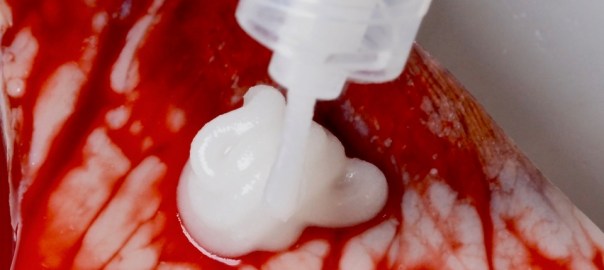
The paste sticks onto wet tissue firmly by repelling blood. Surgeons hope it can save time—and lives.

EXCESSIVE BLEEDING IS, in some sense, an engineering problem.

“For us, everything is a machine, even a human body,” says Hyunwoo Yuk, a research scientist in mechanical engineering at MIT. “They are malfunctioning and breaking, and we have some mechanical way to solve it.”

About 1.9 million people die every year from blood loss, sometimes from trauma, sometimes on the operating table. Bleeding bodies are wet, prone to infection, and need urgent care. Yet it’s hard to create a seal on wet tissue, and most commercial products used to stop dangerous bleeding rely on coagulants which take minutes to work. Some people don’t have minutes.

Read the full story in WIRED

The Squishy, Far-Out New Experiments Headed to the ISS

WIRED

Muscle cells, 3D-printed lunar regolith, and le Blob will soon orbit 250 miles above Earth.

ON TUESDAY, NORTHROP Grumman’s Cygnus cargo spacecraft will haul slime mold, human muscle cells, 3D printer parts for simulated moon rocks, and a mishmash of other exploratory scientific projects to the International Space Station.

The ISS has a long history of hosting experiments designed by scientists eager to explore how rocket launch, microgravity, and handling by astronauts might affect well-established (but Earthly) phenomena. The technologies behind experiments aboard this week’s rocket range from advancing human space exploration to solving health problems on Earth.

A 3D “regolith” printer may end up on a future moon build, and muscle cells grown aboard the ISS may help find drugs to treat age-related muscle loss on Earth. The mesmerizingly complex growth of the slime mold, on the other hand, is largely meant to be educational; it’s aimed at entrancing the hundreds of thousands of students who will be following its progress.

Read the full story in WIRED.

What Rat Empathy May Reveal About Human Compassion

WIRED

Rats may feel concern when cage mates are trapped. But, like people, they don’t always care enough to help.

AGONY IS CONTAGIOUS. If you drop a thick textbook on your toes, circuits in your brain’s pain center come alive. If you pick it up and accidentally drop it on my toes, hurting me, an overlapping neural neighborhood will light up in your brain again.

“There’s a physiological mechanism for emotional contagion of negative responses like stress and pain and fear,” says Inbal Ben-Ami Bartal, a neuroscientist at Tel-Aviv University in Israel. That’s empathy. Researchers debate to this day whether empathy is a uniquely human ability. But more scientists are finding evidence suggesting it exists widely, particularly in social mammals like rats. For the past decade, Bartal has studied whether—and why—lab rodents might act on that commiseration to help pals in need.

Read the full story in WIRED