Category Archives: News

New CRISPR Phase 1 trial hints at a first-of-its-kind heart treatment on horizon

Drug Discovery News

A gene therapy targeting ANTIGPTL3 reduced cholesterol and triglyceride levels simultaneously.

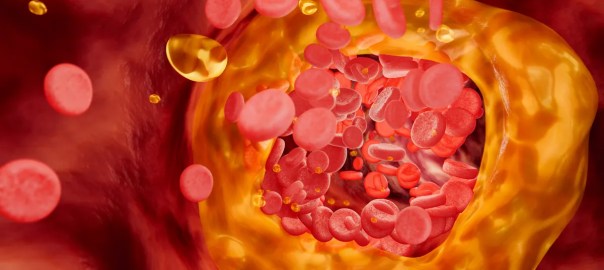
Elevated low-density lipoprotein (LDL) cholesterol and high triglycerides each affect about one in four adults worldwide. But a new CRISPR-Cas9 therapy may reduce the risk of major heart events caused by cholesterol and triglycerides.

LDL and triglycerides are risk factors for plaque buildup in heart disease. On Saturday morning, a team of researchers from Cleveland Clinic, CRISPR Therapeutics, Victorian Heart Institute, New Zealand Clinical Research, and Royal Adelaide Hospital published results in the New England Journal of Medicine from a 15-person Phase 1 trial of CTX310, which cut levels of both by about half.

Read the full story in Drug Discovery News

New therapies could regenerate the heart after heart failure

Drug Discovery News

New progress presented at an annual conference of the American Heart Association signals renewed hope to repair the heart after injury.

When heart failure doesn’t kill immediately, it kills slowly. The heart is said to “remodel” after injury but often can’t come back stronger. Injured sections lose their vital nerves, or gain back too many. Fibroblast cells thicken the pump’s walls with collagen. The adult heart scars, and this weakens its output.

The problem is that adult hearts aren’t programmed to bounce back to their prior abilities. Yet “everything you need to regenerate a heart should exist in the mammalian genome,” said Ahmed Mahmoud, who studies regenerative biology at the Sanford Burnham Prebys Medical Discovery Institute. “We know that early in life, the mammalian heart could actually do it by itself.” In 2011, Mahmoud and colleagues reported that mammals’ hearts can regenerate at very young ages: One-day-old mice recovered from having small slivers of their hearts cut out; seven-day-old mice didn’t.

Read the full story in Drug Discovery News

Gene-edited stem cells aim to reverse rheumatoid arthritis

Drug Discovery News

A new approach for gene editing will get its shot in a common and chronic autoimmune disorder.

At the root of anything good or bad in the human immune system is a question about recognition. When the immune system functions correctly, it clocks unrecognized bacteria and viruses. When it misbehaves, immune cells misidentify the body’s tissue as its own. Such autoimmune disorders attack the pancreas in type 1 diabetes, nerve fibers in multiple sclerosis, and joints in rheumatoid arthritis (RA). Recognition also stifles the drugs designed to treat immune symptoms: Our bodies can develop drug-specific antibodies that target them.

Read the full story in Drug Discovery News

The drugs of the future are in the animals of the past

SEQUENCER

The genomes of extinct creatures like mammoths and giant sloths code for natural antibiotics we’ve never seen. So, now what?

César de la Fuente’s lab has a knack for finding antibiotics in usual places. He doesn’t trudge through swamps or remote forests like a pharmacological Indiana Jones. His lab instead combs through genetic data collected from creatures across all time.  

In just the last few years, they’ve documented unreported antimicrobial compounds hidden in the genomes of Neanderthals, the world’s microbes, and within ourselves. Now, their latest feat carries the torch thanks to a brand new machine learning algorithm they call APEX: antibiotic peptide de-extinction. 

Read the full story and subscribe to Sequencer Magazine

An emotional public hearing on MDMA: ‘Today you will vote on whether my friends live or die’

Sequencer

The FDA may approve psychedelic-assisted therapy for PTSD, but at a recent public hearing it was the therapy — not the drug — that burned in the hot seat.

Yesterday, June 4th, an advisory committee convened to discuss whether to recommend that the US Food and Drug Administration (FDA) approve MDMA psychedelic-assisted therapy for post-traumatic stress disorder (PTSD) when the agency renders a decision this summer. The drug application’s sponsor, Lykos Therapeutics, a biopharma company focusing on mental health treatments, had led two Phase 3 clinical trials combining MDMA with a therapy philosophy allegedly rooted in controversial New Age ideas. The advisory committee invited members of the public to speak. More than 30 individuals shared their testimony in favor or against approval. 

Rather than a straightforward, dusty bureaucratic session, the hearing was eye-opening, puzzling, fascinating, and profoundly sad. 

Read the full story in Sequencer

The biggest threat to biodiversity you’ve never heard of

Sequencer

As a fungus pushes dozens of amphibians into extinction, researchers search for whatever hope they can grab.

Erin Lundy hasn’t always loved frogs. The Hawaiʻi-born biologist and animal care expert had more of a soft spot for marine mammals and in 2018 began working with otters and seals at the Aquarium of the Pacific in Long Beach, California. “They’re very cute, charismatic, and smart,” Lundy told me. Frogs may be cute, she added, but they’re not known for their smarts. 

A couple years into her work in Long Beach, the aquarium needed help with amphibian conservation. A coworker asked if Lundy liked frogs. She replied: “Yeah, enough.”

Against all odds, she came around on amphibians. At first glance, a palm-sized tattoo of an otter inside Lundy’s forearm backs up her professed love of mammals. But there’s a surprise in the tattooed otter’s grasp: a tiny, colorful mountain yellow-legged frog. “It turns out I really like frogs,” she said. 

Lundy became captivated by how in tune frogs are with their habitat. Amphibians have porous, permeable skin that sensitizes them to all the chemicals and conditions of their environment. “They like stability — they don’t like super hot, super cold,” Lundy said. “They’re incredible indicator species of what the health of our environment actually looks like.” 

Read the full story in Sequencer Magazine