Category Archives: Profile, Q&A

The covert project to (finally) measure hellish subway heat

SEQUENCER MAG

Meet Jack Klein, the guy who stealthily collects data about New York’s hottest days underground.

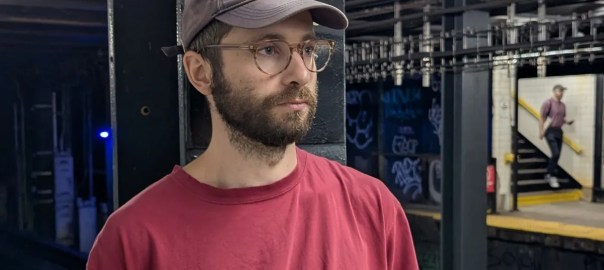
At 181st street in New York’s Washington Heights neighborhood, an August heat wave broils the asphalt, concrete, and any inch of skin exposed to the sun. Shade offers some relief, with one major exception: the underground. Washington Heights resides several hundred feet above lower Manhattan, so its subway stops are buried deeper underground. “People tell me, you’ve gotta go to the elevator inside 181stit’s an inferno,” said Jack Klein, founder of NewYorkLab, a guerilla project to study environmental conditions at subway stations.

Read the full story at Sequencer Magazine

With ‘Digital Twins,’ The Doctor Will See You Now

Quanta Magazine

By creating a digital twin of your circulatory system, Amanda Randles wants to bring unprecedented precision to medical forecasts.

Amanda Randles wants to copy your body. If the computer scientist had her way, she’d have enough data — and processing power — to effectively clone you on her computer, run the clock forward, and see what your coronary arteries or red blood cells might do in a week. Fully personalized medical simulations, or “digital twins,” are still beyond our abilities, but Randles has pioneered computer models of blood flow over long durations that are already helping doctors noninvasively diagnose and treat diseases.

Read the full story in Quanta Magazine

A scientific case for an Earth alive

Sequencer

“Becoming Earth” author Ferris Jabr on his new book and how life emerged as an extension of the planet’s surface.

Ferris Jabr’s sense of the world changed when he learned about rain in the Amazon. It’s no surprise that rain and the world’s most voluminous river feeds the world’s largest tropical rainforest. But Jabr, a science journalist, was struck by how this sorta … missed the point.

It’s backwards. Rather than a jungle springing up in a wet climate, the Amazon generates the rain itself. This is so-called “evapotranspiration” where trees and plants silently pump excess water into the atmosphere — up to 20 billion tons per day. But Jabr’s real surprise came in learning that even evapotranspiration wasn’t the whole story. All the Amazon’s lifeforms were involved.

“The pollen, the fungi, the microbes, all these tiny particles, and gasses and volatile compounds,” contribute to the conditions for rain, Jabr said. “That sparked this curiosity in me: how else is life dramatically changing its environment?”

Read the full story in Sequencer, and subscribe to support our work

Fighting Climate Change One Meal at a Time

CHEMMATTERS

Beth Zotter can talk about anything. The problems she encounters as chief executive officer (CEO) of a food company named Umaro are very specific. But the main focus is algae—which Zotter’s Umaro Foods claims is the future of abundant, sustainable protein—and its mission is to save our planet from climate calamity.

Read the full story in ChemMatters April Issue

The AI Researcher Giving Her Field Its Bitter Medicine

QUANTA MAGAZINE

Anima Anandkumar wants computer scientists to move beyond the matrix, among other challenges.

Anima Anandkumar, Bren Professor of computing at the California Institute of Technology and senior director of machine learning research at Nvidia, has a bone to pick with the matrix. Her misgivings are not about the sci-fi movies, but about mathematical matrices — grids of numbers or variables used throughout computer science. While researchers typically use matrices to study the relationships and patterns hiding within large sets of data, these tools are best suited for two-way relationships. Complicated processes like social dynamics, on the other hand, involve higher-order interactions.

Luckily, Anandkumar has long savored such challenges. When she recalls Ugadi, a new year’s festival she celebrated as a child in Mysore (now Mysuru), India, two flavors stand out: jaggery, an unrefined sugar representing life’s sweetness, and neem, bitter blossoms representing life’s setbacks and difficulties. “It’s one of the most bitter things you can think about,” she said.

She’d typically load up on the neem, she said. “I want challenges.”

Read the full story in Quanta Magazine

When Robots Multiply

GROW

These scientists created living robots out of frog cells. Now these “Xenobots” are reproducing.

IT WOULD PROBABLY have been the science story of the year—any other year. In January 2020, a team of biologists, roboticists and computer scientists announced that they had created the world’s first living robots. These Xenobots were cells culled from a frog, sculpted with the help of an evolutionary algorithm, and then set free to roam under the microscope. Liberated from the constraints of frogness, these cells had designs of their own. They collaborated. They interacted. They performed basic tasks. And eventually, in more recent experiments, they started to multiply.

This is the team’s latest revelation: Xenobots can autonomously assemble identical copies of themselves from individual cells floating in the spring water around them.

Read the full story in GROW.

From Chemist to Food-Tech CEO

ACS ChemMatters Magazine

Aidan Mouat credits “dumb luck” for setting him on a path from chemist to CEO. Mouat has for the past six years run Hazel Technologies, which invented a small packet of chemicals to keep food fresh longer before reaching grocers.

If your store shelves are stocked year-round, you might wonder why these pouches are useful in the first place. What you don’t see is what gets thrown away. The reality is that the world produces “a colossal amount of food waste,” Mouat says. “We have a food system that is focused very heavily on production, instead of efficiency.” So, Mouat and his company co-founders devised a way to help prevent produce spoilage on its way from farm to store.

Read the full story in the December issue of ChemMatters