MIT Technology Review
Scientists hope to prevent deaths from climate change, but heat and cold are more complicated than we thought.
It’s the 25th of June and I’m shivering in my lab-issued underwear in Fort Worth, Texas. Libby Cowgill, an anthropologist in a furry parka, has wheeled me and my cot into a metal-walled room set to 40 °F. A loud fan pummels me from above and siphons the dregs of my body heat through the cot’s mesh from below. A large respirator fits snug over my nose and mouth. The device tracks carbon dioxide in my exhales—a proxy for how my metabolism speeds up or slows down throughout the experiment. Eventually Cowgill will remove my respirator to slip a wire-thin metal temperature probe several pointy inches into my nose.
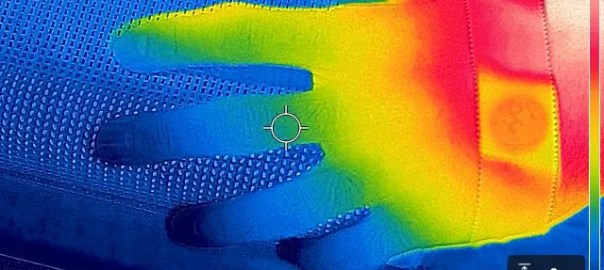
Cowgill and a graduate student quietly observe me from the corner of their so-called “climate chamber.” Just a few hours earlier I’d sat beside them to observe as another volunteer, a 24-year-old personal trainer, endured the cold. Every few minutes, they measured his skin temperature with a thermal camera, his core temperature with a wireless pill, and his blood pressure and other metrics that hinted at how his body handles extreme cold. He lasted almost an hour without shivering; when my turn comes, I shiver aggressively on the cot for nearly an hour straight.
I’m visiting Texas to learn about this experiment on how different bodies respond to extreme climates. “What’s the record for fastest to shiver so far?” I jokingly ask Cowgill as she tapes biosensing devices to my chest and legs. After I exit the cold, she surprises me: “You, believe it or not, were not the worst person we’ve ever seen.”
Read the story in the BODY issue of MIT Tech Review (Dec. 2025)

 Max G. Levy