Tag Archives: Essay

What AI can actually do to your critical thinking skills

SEQUENCER

Chatbots won’t obliterate everyone’s critical thinking. Lessons from the past tech revolutions and today’s experts signal how to protect your mind.

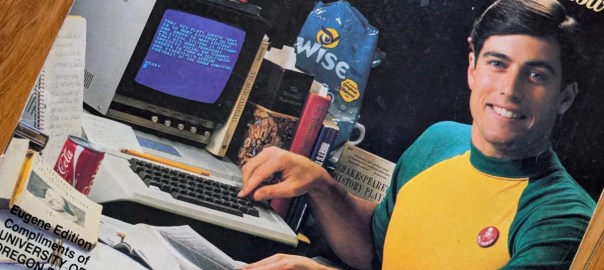
A couple months ago, while I was thumbing through old magazines at a record shop, I landed on a gem. “Learning To Love the Computer” emblazoned the cover of Nutshell magazine, a now-defunct periodical for college students. This 1981 issue showed a desk littered with books about Shakespeare, some chips, a Coke can, a boxy PC displaying the start of a homework assignment, and a college student grinning widely. I grinned back. Then I bought the issue.

“You’d better hurry up and learn to love them, because they’re rapidly reshaping our world,” the story said of PCs. Computers changed how we worked and socialized as they swallowed steadily larger bites of tasks previously reserved for typewriters, pens, and minds. That momentum has not stopped. And as generative AI gobbles up internet functions from research to retail, our professional and personal lives also invariably shift.
Read the full story in Sequencer Magazine

Tell me what you don’t know

Sequencer

Scientific misinformation is a community problem. We can fight back by embracing uncertainty.

Twenty-five floors above the clouds of indoor cigarette smoke at the Horseshoe Casino in Las Vegas, Nevada, hundreds of self-described “skeptics” gathered to discuss science, health, and paranormal claims. But far from conspiracy thinking, this group organized by the Committee for Skeptical Inquiry defines skepticism as questioning facts in good faith. They arrived to learn how to recognize and combat misinformation. And ten days before the 2024 presidential election, I traveled to their Las Vegas conference as a science reporter with a similar goal.

Read the full story at Sequencer

I tried to train my color vision. Here’s what happened.

Sequencer

When I gamified my color blindness, I stumbled into the limits and latitudes of neuroplasticity.

One afternoon during my PhD, I took a break from lab work to snack on a banana. I grabbed a seat in the office, slid off my headphones, and peeled open my treat. Just as I bit in, I noticed a labmate staring at me.

“Max,” she told me, holding back some laughter. “That banana is a 4.”

I instantly knew what she meant because I’d made this mistake before. The banana was days from being ripe, and I had misjudged the color. A laughably green banana.

Even before I knew that I had mild deuteranomaly (so-called red-green colorblindness), I struggled with cryptic color schemes on spreadsheets and graphs. Whether in spite or because of this, color theory fascinated me. I had neurological, practical, and philosophical questions. Why do we call the retina’s longest wavelength cone “red” when it actually best absorbs yellow-green light? Why does mixing paint obey different rules than mixing light? If I could see through your eyes, would your mental images match mine — does your blue match my blue? And I had questions that blended all three, like what the hell is brown???

Read the full story in Sequencer Magazine